


Publication History
Submitted: October 31, 2024
Accepted: November 22, 2024
Published: March 31, 2025
Identification
D-0596
DOI
https://doi.org/10.71017/djnsi.4.5.d-0596
Citation
Dhan Bahadur Budha & Khimananda Panthi (2025). Analysis of Variation Order on Bridge Construction Projects under Department of Road: (A Case Study of Road Division Office, Rupandehi). Dinkum Journal of Natural & Scientific Innovations, 4(05):291-312.
Copyright
© 2025 The Author(s).
Vol. 4 No. 05 (2025) Original Article 
291-312
Analysis of Variation Order on Bridge Construction Projects under Department of Road: (A Case Study of Road Division Office, Rupandehi)Review Article
Dhan Bahadur Budha 1*, Khimananda Panthi 2
- Department of Road, Government of Nepal, Nepal.
- Individual Consultant, Kathmandu-Terai Fast Track Road Project, Nepal
* Correspondence:budhadhan@gmail.com
Abstract: The construction industry is a highly dynamic sector consisting of a range of complexities and uncertainties regarding time and cost. Variation is inevitable in construction projects due to the complex nature of the construction industry. Variation order is observed as one of the most frequently occurring issues in bridge construction projects in Nepal. The study firstly identified the causes of variation orders; then to determine the impacts of variation orders; and finally, to recommend strategies to minimize variation orders. A questionnaire survey, a case study and a key informant interview were carried out to identify the causes of variation orders, their impacts on bridge projects and to seek recommendations to minimize them. The questionnaire responses were analyzed using the relative importance index (RII) method. The case study was conducted on six selected projects and the causes of variation orders and their impacts on the projects were identified. The key informant interviews were conducted with selected experienced bridge project participants. The questionnaire survey, case study and KII were done to improve the validity of the findings from the study. The results indicated that poor investigation of site, change in design during construction, poor estimation of project, lack of strategic planning /inadequate planning, differing site conditions were the most significant causes of variation orders. The results also showed that time overrun, increase in project cost, disputes between parties to the contract, progress affected and additional payments were the most impact of variation orders on bridge projects. The findings also suggested the most recommended strategies to minimize or control the variation orders. These strategies are recommended to carry out detailed site investigations including detailed soil investigations, thorough review of designs, drawings and plans before the tendering stage, preparation of good estimate and tender documents in the pre-tender planning phase, adequate planning by all involved parties before work and design of the project by experienced and knowledgeable personnel on bridge projects.
Keywords: variation, causes, impacts, investigations, suggestive measure
- INTRODUCTION
Variation is a deviation from recognized norms or a change, especially in the quantity or degree of something. A variation order is the formal document that is used to modify the original contractual agreement provided to the contractor by the client or the client’s representative and becomes part of the project’s documents [1]. Any addition, deletion, alteration or any other revision to project goals and scope of work are considered to be variation, whether they increase or decrease the project cost or schedule [2]. Variation orders involve addition, omission, alteration and substitution in terms of quality, quantity and schedule of work. The construction industry is a highly dynamic sector, consisting of a range of complexities and uncertainties regarding time and cost. These are faced due to evolving and emerging conditions through project lifecycles and project environmental circumstances [3]. Changes are inevitable in any construction project due to its complicated nature and other unforeseen causes which have an impact on overall project performance. The sources of variations include the performance of construction parties, resources availability, environmental conditions, involvement of other parties, and contractual relations [4]. Variations can cause substantial adjustments to the contract duration, project cost or both. One of the major problems faced by the construction project is the issue of the variation order occurring during the construction phase [5]. Arguably, the more the occurrence of variation orders, the greater the probability that unnecessary costs could accrue, impacting the overall project cost. Whenever a variation order is issued, whether leading to additions, alterations, omissions or substitutions, unnecessary costs are likely to be incurred [6]. Variation orders do not only affect project performance in terms of time and cost, they also adversely affect the quality, health and safety and professional relations [7]. However, factors influencing the occurrence of variation orders and their impact on project performance vary from one project to another. Factors include the nature of works, the complexity of the project and the procurement method [8]. Well management of variation orders results in uninterrupted construction operations and agreed project costs as well as duration [9]. Research has shown that a complete design before work begins on site significantly reduces both increased costs and time delays and avoids change orders [10]. The United Nations (UN) categorized Nepal as the least developed country. Currently, many physical infrastructures like Buildings, Roads, Hydropower, Irrigation Canals, Bridges etc. are being constructed by government and non-government sectors to provide facilities to people and improve their economic status. The Department of Roads (DoR) is the main government organization in Nepal for the construction of strategic road networks and bridges. DoR had been set the target to complete 300 bridge projects in Fiscal Year (F/Y) 2076/77 but only 210 bridges were completed [11]. That means only about 70% of the targeted projects were completed. Completion of any project within the stipulated time will help the country’s economy. But all the projects are not completed within the stipulated time due to various reasons. From various literature reviews, it is seen that variation is also a reason why the projects were not completed within the stipulated time and allocated budget. Road Division Office (RDO) Butwal has completed many bridge projects in the past fiscal years. Bridge projects completed in F/Y 2077/078 under RDO, Butwal are selected as the study area of this thesis. These projects were selected as they were recently completed projects under RDO, Butwal. This study undertakes six bridge projects to understand the causes and effects of variation in bridge projects. Rohini River Bridge, Rupandehi, Danav River Bridge connecting Butwal Ward No. 13 & 15, Rupandehi, Danav River Bridge connecting Tamnagar & Semlar, Rupandehi, Jharahi khola Bridge, Nawalparasi, Kerunge Khola Bridge, Nawalparasi and Tinau River Bridge, Rupandehi bridge projects were taken for the study to meet the requirement of research objective. Variations in construction projects cannot be completely avoided but can be minimized. Therefore, this study is focused on finding out the causes of variation in the bridge projects & its impacts on the project duration & cost of the bridge projects. The almost inevitable situation in construction projects is variation. It is common in all types of construction projects and plays an important role in determining the closing cost and time of the projects [12]. The maximum project performance would be achieved if the activities of the project invariably flowed smoothly within time limits and anticipated budget. Variation orders result in time delay, cost overrun, quality defects, and other negative impacts [13]. From the study of various literatures, it is found that in almost cases, there is a variation order that occurs during the progress of construction projects. This leads somehow affect the performance of projects and problems towards the contractors, consultant, clients and users. Numerous bridge projects along the SRN and LRN have been completed by DoR since a long time ago in Nepal. There have been numbers of bridge projects that are under construction. However, it has been noticed that projects are not commissioned on time as per the pre-determined schedule. These typical tangible problems associated with bridge projects causing numerous problems to the authority (DOR), stakeholders, government and direct users of transportation itself. The highest number of bridge projects were completed in 2020/21 by the road division office Rupandehi among other offices of DoR. According to a report published by the Office of the Auditor General, (2022) some of bridge projects were suffered from variation order due to various reasons during construction. Variation orders may affect the performance of projects during the construction phase. The negative consequences arising from such problems need to be addressed quantitatively and scientifically. Yet, no unique method is available for minimizing variation orders effectively. However, their impact can be minimized with an appropriate study about the causes.
- MATERIALS AND METHODS
The study primarily based on the quality of primary and secondary data. The main gist of the problem is identified and based on such problems the associated specific questions and objectives are being determined. In order to complete the research objectives aiming the outcomes the crucial data collection was done by considering primary and secondary data. The primary data was collected by doing questionnaire survey and output assessment was carried out by analyzing the result. Apart from that, technical data, agreement date and amount of each project, VO documents of the projects and other project related documents were studied and analyzed. The study is based on both qualitative & quantitative approaches. A qualitative approach is used to understand the criticality of causes and impacts of variation orders in bridge projects through a questionnaire survey and key informant interview. However, a quantitative approach has been employed to understand the impacts of variation on selected projects. The research is analytical research. Direct analysis of the approved variation files, bills of quantity, bills approved by the client for payment, letters and similar documents was analyzed. Similarly, questionnaire surveys were carried out with structured questions regarding the research objectives. This study is focused on the study of causes and impacts of variation orders in bridge construction projects under Department of Road, Division Road Office Butwal. The major bridge projects were selected to meet the requirement of research objective. Among six bridge projects four bridge projects lies within Rupandehi district and remaining projects lies within Nawalparasi district. All the completed projects were taken for this study. Name of projects & their locations are given below.
- Rohini River Bridge connecting parliamentary constituencies No. 1 & 2 of Rupandehi.
- Danav River Bridge, Jitgadhi, Rupandehi
- Danav River Bridge Tamnagar, Rupandehi
- Jharahi Khola Bridge, Chhokti badsare, Nawalparasi
- Kerunge Khola Bridge connecting Kawaswoti-4 & 5, Nawalparasi
- Tinau River Bridge connecting new & old bazar of Butwal, Rupandehi
Eighteen numbers of bridge projects were completed in fiscal year 2077/078 under RDO Butwal which was the highest number among the other division offices under the department of road. The study is based on a case study. In this study, six major projects (length ≥ 100 m) were selected for the study to meet the research objectives. The study population consists of clients and contractors’ representatives of six major projects, who were involved in the selected projects and have an idea and experience regarding variation orders in bridge projects. There were engineers and sub- engineers representing clients and project managers, engineers and sub- engineers representing contractor in each project. The consultants were not involved in the selected projects.
| S.N. | Name of project | Client | Contractors’ representatives | |||
| Engineer | Sub-Engineer | Project Manager | Engineer | Sub-Engineer | ||
| 1 | Rohini River Bridge, Rupandehi | 2 | 3 | 1 | 1 | 2 |
| 2 | Danav River Bridge, Rupandehi | 2 | 3 | 1 | 1 | 2 |
| 3 | Danav River Bridge, Tamnagar, Rupandehi | 2 | 3 | 1 | 1 | 2 |
| 4 | Jharahi khola Bridge, Nawalparasi | 3 | 5 | 1 | 1 | 2 |
| 5 | Kerunge Khola Bridge, Nawalparasi | 2 | 4 | 1 | 1 | 2 |
| 6 | Tinau River Bridge, Rupandehi | 3 | 4 | 1 | 1 | 2 |
| Total | 14 | 22 | 6 | 6 | 12 | |
| Grand-Total | 60 | |||||
As shown in Table 01 total respondents from client representatives were 36 and contractor’s representatives were 24. All the respondents were engineer, sub-engineer from client & project manager, engineer & sub-engineer level from contractors’ representatives as the designation. The grand total of respondents was 60 from all six projects. Since the study population size was small, therefore all the population was taken in this research study. Data collection is a process of gathering information from all the relevant sources to find a solution to the research problem. It helps to evaluate the outcome of the problem. Data can be classified into two types, namely primary data and secondary data. The primary importance of data collection in any research is that it helps to determine many important things about the projects, particularly the performance. So, the data collection process plays an important role in all the streams. Depending on the type of data, the data collection method is divided into two categories namely,
- Primary Data Collection methods
- Secondary Data Collection methods
Both the primary data and secondary sources were used for this study purposes.
Key informant interviews are qualitative in-depth interviews with people. The purpose of key informant interviews is to collect information from a wide range of people who have first-hand knowledge. These community experts, with their particular knowledge and understanding, can provide insight into the nature of problems and give recommendations for solutions. The interview was conducted with the interviewee asking questions selected individuals. Interviews were conducted with the Superintendent Engineer, Senior Divisional Engineer and Contract Manager/Engineer of Contractors who were involved in the bridge construction projects under the department of road. The interview was taken for this study to gather information on the causes and impacts of variation orders on bridge projects as well as to look for recommendations if any to minimize them.
Table 02: List of members involved in key informant interview (KII)
| S.N. | Position/Designation | Organization | Nos. of Member |
| 1 | Superintendent Engineer | Department of Road | 1 |
| S.N. | Position/Designation | Organization | Nos. of Member |
| 2 | Senior Divisional Engineer | Department of Road | 3 |
| 3 | Engineer/Contract Manager | Arghakhachi-Babul JV | 1 |
| 4 | Engineer/Contract Manager | Adventure Construction Pvt Ltd | 1 |
Table 03: Result of Cronbach’s alpha reliability test
| Section | Description | Cronbach’s alpha (α) | Internal Consistency |
| 1 | Causes of variation order | 0.85 | Good |
| 2 | Impact of variation order | 0.76 | Acceptable |
| 3 | Control measures to minimize variation order | 0.80 | Good |
The values of Cronbach’s alpha (α) for reliability test can be seen in the table above. As we obtained the result of Cronbach’s alpha to be above 0.70 for every section in the research, the data from the questionnaire is considered to be reliable based on the aforementioned theory.
- RESULT & DISCUSSION
Variation orders issued on the projects were obtained from the client. The responses to the questionnaire were based on Likert’s scale of five ordinal measures which were from one to five arranged in ascending order according to the degree of contribution to each question. The data obtained from the questionnaire survey was analyzed by using the Relative Importance Index (RII) technique. Likert- type scale was used in analyzing qualitative data obtained from the questionnaires, which is suitable for ranking the statements of respondents’ views by using the relative importance scale (RII). The relative importance index (RII) for each variable was computed by using the following formula:
RII=
Were,
RII= Relative Importance Index
W= Scale for weight in the scale (ranges from 1 to 5)
A= The highest weight of the scale (equal to 5)
N= Total number of respondents concerning each factor
Table 04: Causes of Variation Orders and Poor investigation of site
| S.N. | Causes of Variation Orders | Never (1) | Seldom (2) | Sometimes (3) | Often (4) | Always (5) |
| 1 | Poor investigation of site | 1 | 2 | 12 | 17 | 4 |
RII = (1*1+2*2+3*12+4*17+5*4)/ (5*36) = 0.72
Where 36 is the sum of total respondents.
The Spearman rank correlation coefficient (ρ) was also analysed to check the correlation between perception of different groups. The Spearman (ρ) rank correlation coefficient for any two groups of ranking is given by the following formula:
Spearman correlation coefficient
(ρ)=1- 6*∑d^2/(n*(n^2-1)
Were,
d= Difference between two ranks of each observation
n= number of observations
The value of the Spearman (ρ) rank correlation coefficient varies between -1 and +1. A correlation coefficient of +1 implies perfect positive correlation, 0 implies no correlation and -1 implies perfect negative correlation.
| S.N. | Objective | Data Required | Data Source | Data Analysis Tools | Outcomes |
| 1 | To identify the causes of variation order in bridge construction projects.
|
Variation Order files, related letters, Opinion of the involved parties in bridge projects, opinion of senior official involved in bridge projects. | Clients,
contractor’s representatives, Senior official of DoR |
RII, KII, Spearman correlation coefficient, Ms- Excel | Various causes of variation order in bridge project. |
| S.N. | Objective | Data Required | Data Source | Data Analysis Tools | Outcomes |
| 2 | To assess the impact of variation orders on project completion time and project cost in bridge construction projects. | BoQ, IPCs, Drawings, Opinion of the involved parties in bridge projects | Clients &
contractor’s representatives |
RII, KII, Spearman correlation coefficient, Ms- Excel | Impact of variation in completion of bridge project.
|
| 3 | To explore the preventive measures to be suggested to reduce the variation orders.
|
Opinion of the involved parties in bridge projects, opinion of senior official involved in bridge projects. | Clients, contractor’s representatives, Senior official of DoR | RII, KII, Spearman correlation coefficient, Ms- Excel | Preventive measures to minimize the variation orders. |
Table 06: Ranking of causes of variation order as per client group
| S.N. | Causes of Variation Orders | Client (N=36) | |
| RII | Rank | ||
| 1 | Poor investigation of site | 0.72 | 1 |
| 2 | Change in design during construction | 0.69 | 2 |
| 3 | Poor Estimation of project | 0.68 | 3 |
| 4 | Lack of strategic planning /inadequate planning | 0.67 | 4 |
| 5 | Differing site conditions | 0.66 | 5 |
| 6 | Errors and omission in design | 0.65 | 6 |
| 7 | Change of plans, schedule or scope | 0.64 | 7 |
| 8 | Lack of consultant’s knowledge, judgement & experience | 0.63 | 8 |
| S.N. | Causes of Variation Orders | RII | Rank |
| 9 | Lack of coordination among project parties | 0.62 | 9 |
| 10 | Unforeseen problems | 0.61 | 10 |
| 11 | Contractor’s desired profitability /Contractor’s desire to improve his financial situation | 0.60 | 11 |
| 12 | Socio-cultural factors/Local residents | 0.58 | 12 |
| 13 | Natural disasters | 0.57 | 13 |
| 14 | Internal politics/Political pressure | 0.56 | 14 |
| 15 | Design complexity | 0.54 | 15 |
| 16 | Lack of materials and equipment due to closure/shortage of materials | 0.53 | 16 |
| 17 | Conflicts between contract documents | 0.52 | 17 |
| 18 | Weather conditions | 0.50 | 18 |
| 19 | Technology change | 0.49 | 19 |
| 20 | Changes in specifications by owner | 0.47 | 20 |
| 21 | Change in government rules/regulations | 0.47 | 20 |
| 22 | Health and safety considerations | 0.41 | 22 |
| 23 | Financial problems of owner | 0.41 | 22 |
Table 07: Ranking of causes of variation order as per contractors’ representatives
| S.N. | Causes of Variation Orders | Contractor Group (N=24) | |
| RII | Rank | ||
| 1 | Change in design during construction | 0.70 | 1 |
| 2 | Poor investigation of site | 0.68 | 2 |
| 3 | Poor Estimation of project | 0.65 | 3 |
| 4 | Differing site conditions | 0.65 | 3 |
| 5 | Lack of strategic planning /inadequate planning | 0.64 | 5 |
| 6 | Change of plans, schedule or scope | 0.62 | 6 |
| 7 | Internal politics/Political pressure | 0.62 | 6 |
| 8 | Unforeseen problems | 0.61 | 8 |
| 9 | Lack of consultant’s knowledge, judgement & experience | 0.59 | 9 |
| 10 | Weather conditions | 0.58 | 10 |
| 11 | Socio-cultural factors/Local residents | 0.58 | 10 |
| 12 | Errors and omission in design | 0.57 | 12 |
| 13 | Contractor’s desired profitability /Contractor’s desire to improve his financial situation | 0.57 | 12 |
| 14 | Natural disasters | 0.57 | 12 |
| 15 | Lack of coordination among project parties | 0.56 | 15 |
| 16 | Conflicts between contract documents | 0.54 | 16 |
| 17 | Changes in specifications by owner | 0.53 | 17 |
| 18 | Lack of materials and equipment due to closure/shortage of materials | 0.52 | 18 |
| 19 | Technology change | 0.51 | 19 |
| 20 | Design complexity | 0.50 | 20 |
| 21 | Change in government rules/regulations | 0.49 | 20 |
| 22 | Health and safety considerations | 0.45 | 22 |
| S.N. | Causes of Variation Orders | RII | Rank |
| 23 | Financial problems of owner | 0.41 | 22 |
Table 08: Summary of correlation test on the ranking of causes of variation order
| S.N. | Respondents | (ρ)=1- 6*∑d^2/(n*(n^2-1) | Relation of the respondents | Direction |
| 1 | Client Vs Contractor | 0.87 | Strong | Positive |
The correlation coefficient is a statistical measure of the strength of the relationship between the relative movements of two variables. A correlation coefficient of 0.87 indicates a strong positive correlation, meaning that the two variables tend to move in same directions. The coefficient is closer to +1.0, indicates the strong positive relationship between two variables. Therefore, it can be concluded that there is strong correlation between the opinions of the respondents from both groups [14]. This means that most of the respondents have the same perception about the causes of variation orders.
- Null Hypothesis (H0) = There is no monotonic relationship between the clints’ view and the contractor representatives’ view (i.e. ρ = 0) on the causes of variation order on bridge projects.
- Alternate Hypothesis (H1) = There is monotonic relationship between the clints’ view and the contractor representatives’ view (i.e. ρ ≠ 0) on the causes of variation order on bridge projects.
- Level of significance (α) = 0.05
- Critical value for 5% level of significance for two tailed tests with degree of freedom 21 (T critical) = 2.08
- Calculated value of T-statistics = ρ × √N−2 √1−𝜌2 = 8.14
- Calculated P-value for degree of freedom (dof) 21 with above obtained T-statistics (P-value) =0.000000062.
- Result and decision: Here, P-value < α, hence, reject the null hypothesis (H0) and accept the alternate hypothesis (H1). Therefore, it is concluded that there is monotonic relationship between the clints’ view and the contractor representatives’ view on the causes that contribute to the variation order on bridge projects.
Table 09: Overall ranking of causes of variation order
| S.N. | Causes of Variation Orders | Overall Responses (N=60) | |
| RII | Rank | ||
| 1 | Poor investigation of site | 0.70 | 1 |
| 2 | Change in design during construction | 0.69 | 2 |
| 3 | Poor Estimation of project | 0.67 | 3 |
| 4 | Lack of strategic planning /inadequate planning | 0.66 | 4 |
| 5 | Differing site conditions | 0.65 | 5 |
| S.N. | Causes of Variation Orders | RII | Rank |
| 6 | Change of plans, schedule or scope | 0.63 | 6 |
| 7 | Lack of consultant’s knowledge, judgement & experience | 0.62 | 7 |
| 8 | Errors and omission in design | 0.62 | 7 |
| 9 | Unforeseen problems | 0.61 | 9 |
| 10 | Contractor’s desired profitability /Contractor’s desire to improve his financial situation | 0.59 | 10 |
| 11 | Lack of coordination among project parties | 0.59 | 10 |
| 12 | Internal politics/Political pressure | 0.58 | 12 |
| 13 | Socio-cultural factors/Local residents | 0.58 | 12 |
| 14 | Natural disasters | 0.57 | 14 |
| 15 | Conflicts between contract documents | 0.53 | 15 |
| 16 | Weather conditions | 0.53 | 15 |
| 17 | Lack of materials and equipment due to closure/shortage of materials | 0.52 | 17 |
| 18 | Design complexity | 0.52 | 17 |
| 19 | Technology change | 0.50 | 19 |
| 20 | Changes in specifications by owner | 0.49 | 20 |
| 21 | Change in government rules/regulations | 0.48 | 21 |
| 22 | Health and safety considerations | 0.42 | 22 |
| 23 | Financial problems of owner | 0.41 | 23 |
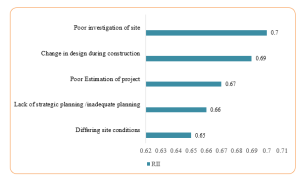
Figure 01: Top five causes of variation order
Table 10: Causes of variation order in selected projects
| S.N. | Project Name | Reason for variation order |
| 1 | Rohini River Bridge connecting constituency 1 & 2, Rupandehi (DROBTL/3371574/2073/074/248) | Additional works for approach road demanded by local people |
| Lack of quantities estimation for river training works | ||
| Additional quantities for retaining structures due to differing site condition | ||
| 2 | Danav River Bridge connecting Butwal 13 & 15, Rupandehi (DROBTL/3371574/2073/074/317) | Culvert for irrigation canal across the approach road of bridge not included during survey design & quantity estimation |
| 3 | Danav River Bridge connecting Tamnagar & Semlar, Rupandehi (DROBTL/3371574/2073/074/247) | Minor changes in quantities |
| 4 | Jharahi khola Bridge, Nawalparasi (91/065/66) | Design Review due to foundation problem |
| 5 | Kerunge Khola Bridge connecting Kawasoti 4 & 5, Nawalparasi (DROBTL/3371574/2072/073/106) | Masonry wingwall replaced by RCC wall due to high current of water flow & height of wall is more than 7 meters. |
| Additional gabion wall for river training works to guide the river flow & preventing the village. | ||
| 6 | Tinau River Bridge connecting new & old Bazar, Rupandehi (91/068/069) | Length of bridge reduced by design review. |
The impacts of variation orders on bridge projects are determined using a 5-point Likert scale, namely No impact = 1, Low impact = 2, Medium impact = 3, High impact = 4 and very high impact = 5. They are ranked by comparing their relative importance index (RII).
Table 11: Frequency of impact of variation order from the clients group
| S.N. | Impact of Variation Orders | Client Group (N=36) | |
| RII | Rank | ||
| 1 | Time overrun | 0.82 | 1 |
| 2 | Increase in project cost | 0.79 | 2 |
| 3 | Progress affected | 0.76 | 3 |
| 4 | Additional payments for contractor | 0.74 | 4 |
| 5 | Disputes between parties to the contract | 0.73 | 5 |
| 6 | Completion schedule delay | 0.71 | 6 |
| 7 | Additional specialist personnel, equipment | 0.66 | 7 |
| 8 | Delay in payment | 0.65 | 8 |
| 9 | Professional reputation of one or more parties adversely affected | 0.64 | 9 |
| 10 | Productivity degradation | 0.58 | 10 |
| 11 | Additional health & safety equipment/measure | 0.54 | 11 |
| 12 | Rework and demolition | 0.53 | 12 |
| 13 | Decrease in project cost | 0.47 | 13 |
Table 12: Frequency of impact of variation order from the contractors’ representatives
| S.N. | Impact of Variation Orders | Contractors Group (N=24) | |
| RII | Rank | ||
| 1 | Time overrun | 0.84 | 1 |
| 2 | Disputes between parties to the contract | 0.82 | 2 |
| 3 | Increase in project cost | 0.81 | 3 |
| 4 | Progress affected | 0.74 | 4 |
| 5 | Additional payments for contractor | 0.73 | 5 |
| 6 | Delay in payment | 0.73 | 5 |
| 7 | Completion schedule delay | 0.67 | 7 |
| 8 | Additional specialist personnel, equipment | 0.65 | 8 |
| 9 | Professional reputation of one or more parties adversely affected | 0.62 | 9 |
| 10 | Additional health & safety equipment/measure | 0.56 | 10 |
| 11 | Rework and demolition | 0.56 | 10 |
| 12 | Productivity degradation | 0.52 | 12 |
| 13 | Decrease in project cost | 0.42 | 13 |
Table 13: Summary of correlation test on the ranking of impact of variation order
| S.N. | Respondents | (ρ)=1- 6*∑d^2/(n*(n^2-1) | Relation of the respondents | Direction |
| 1 | Client Vs Contractor | 0.91 | strong | Positive |
The correlation coefficient is a statistical measure of the strength of the relationship between the relative movements of two variables. A correlation coefficient of 0.91 indicates a strong positive correlation, meaning that the two variables tend to move in the same directions. The coefficient is closer to +1.0, indicates the strong positive relationship between the two variables. Therefore, it can be concluded that there is strong a correlation between the opinions of the respondents from both groups [15]. This means that most of the respondents have the same perception about the impacts of variation orders.
- Null Hypothesis (H0) = There is no monotonic relationship between the clints’ view and the contractor representatives’ view (i.e. ρ = 0) on the impacts of variation order on bridge projects.
- Alternate Hypothesis (H1) = There is monotonic relationship between the clints’ view and the contractor representatives’ view (i.e. ρ ≠ 0) on the impacts of variation order on bridge projects.
- Level of significance (α) = 0.05
- Critical value for 5% level of significance for two tailed tests with degree of freedom 11 (T critical) = 2.201
- Calculated value of T-statistics = ρ × √N−2 √1−𝜌2 = 7.37
- Calculated P-value for degree of freedom (dof) 11 with above obtained T-statistics (P-value) =0.000014.
- Result and decision: Here, P-value < α, hence, reject the null hypothesis (H0) and accept the alternate hypothesis (H1). Therefore, it is concluded that there is monotonic relationship between the clints’ view and the contractor representatives’ view on the impacts of variation order on bridge projects.
Table 14: Overall frequency of impact of variation order
| S.N. | Impact of Variation Orders | Overall (N=60) | |
| RII | Rank | ||
| 1 | Time overrun | 0.83 | 1 |
| 2 | Increase in project cost | 0.80 | 2 |
| 3 | Disputes between parties to the contract | 0.77 | 3 |
| 4 | Progress affected | 0.75 | 4 |
| 5 | Additional payments for contractor | 0.74 | 5 |
| 6 | Completion schedule delay | 0.69 | 6 |
| 7 | Delay in payment | 0.68 | 7 |
| 8 | Additional specialist personnel, equipment | 0.65 | 8 |
| 9 | Professional reputation of one or more parties adversely affected | 0.63 | 9 |
| 10 | Productivity degradation | 0.55 | 10 |
| 11 | Additional health & safety equipment/measure | 0.55 | 10 |
| 12 | Rework and demolition | 0.54 | 12 |
| 13 | Decrease in project cost | 0.45 | 13 |
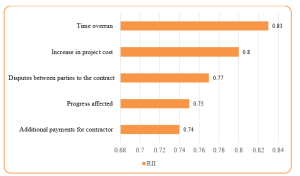
Figure 02: Top five impact of variation order
Table 15: Variation on Rohini river bridge project
| S.N. | Description of items | Original Cost (NRs) | Revised cost after V.O. (NRs) | Variation Amount (NRs) | Variation % w.r.t. total cost |
| 1 | General | 1,836,763.00 | 1,836,763.00 | 0.00 | 0.00 |
| 2 | Foundation works | 51,413,276.19 | 50,895,610.17 | (517,666.02) | -0.34 |
| S.N. | Description of items | Original Cost (NRs) | Revised cost after V.O. (NRs) | Variation Amount (NRs) | Variation % w.r.t. total cost |
| 3 | Sub-Structure works | 15,217,142.49 | 18,050,647.83 | 2,833,505.34 | 1.86 |
| 4 | Super- Structure works | 57,215,465.97 | 57,188,201.05 | (27,264.92) | -0.02 |
| 5 | Approach Road | 9,929,137.27 | 18,825,522.38 | 8,896,385.11 | 5.84 |
| 6 | River training works | 16,483,374.42 | 23,994,815.33 | 7,511,440.91 | 4.93 |
| 7 | Miscellaneous works | 205,025.00 | 205,025.00 | 0.00 | 0.00 |
| Total | 152,300,184.34 | 170,996,584.76 | 18,696,400.42 | 12.28 |
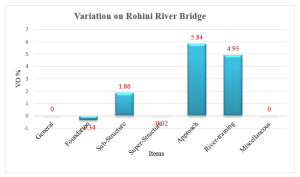
Figure 03: Variation % on Rohini river bridge project
Table 16: Variation on Danav River bridge project
| S.N. | Description of items | Original Cost (NRs) | Revised cost after V.O. (NRs) | Variation Amount (NRs) | Variation % w.r.t. total cost |
| 1 | General | 1,300,250.00 | 1,300,250.00 | – | 0.00 |
| 2 | Foundation works | 46,090,208.15 | 46,363,677.72 | 273,469.57 | 0.24 |
| 3 | Sub-Structure works | 12,659,174.15 | 15,327,814.87 | 2,668,640.72 | 2.35 |
| 4 | Super- Structure works | 32,116,221.79 | 32,235,968.29 | 119,746.50 | 0.11 |
| 5 | Approach Road | 6,315,379.00 | 6,281,899.46 | (33,479.54) | -0.03 |
| 6 | River training works | 14,662,520.00 | 14,662,520.00 | – | 0.00 |
| 7 | Miscellaneous works | 291,000.00 | 291,000.00 | – | 0.00 |
| Total | 113,434,753.09 | 116,463,130.34 | 3,028,377.25 | 2.67 |
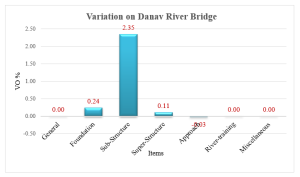
Figure 04: Variation % on Danav River bridge project
Table 17: Variation on Danav River bridge project, Tam Nagar
| S.N. | Description of items | Original Cost (NRs) | Revised cost after V.O. (NRs) | Variation Amount (NRs) | Variation % w.r.t. total cost |
| 1 | General | 1,820,463.00 | 1,820,463.00 | – | 0.00 |
| 2 | Foundation works | 45,062,841.12 | 44,022,371.23 | (1,040,469.89) | -0.72 |
| 3 | Sub-Structure works | 26,095,812.87 | 25,907,492.87 | (188,320.00) | -0.13 |
| S.N. | Description of items | Original Cost (NRs) | Revised cost after V.O. (NRs) | Variation Amount (NRs) | Variation % w.r.t. total cost |
| 4 | Super- Structure works | 44,430,420.76 | 43,210,018.07 | (1,220,402.69) | -0.85 |
| 5 | Approach Road | 8,695,271.13 | 8,047,763.47 | (647,507.66) | -0.45 |
| 6 | River training works | 17,472,019.09 | 16,732,563.05 | (739,456.04) | -0.51 |
| 7 | Miscellaneous works | 210,626.00 | 210,626.00 | – | 0.00 |
| Total | 143,787,453.97 | 139,951,297.69 | (3,836,156.28) | -2.67 |
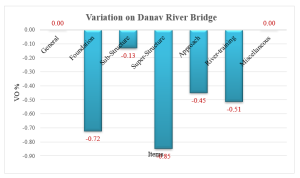
Figure 05: Variation % on Danav River bridge project, Tam Nagar
Table 18: Variation on Jharahi khola bridge project
| S.N. | Description of items | Original Cost (NRs) | Revised cost after V.O. (NRs) | Variation Amount (NRs) | Variation % w.r.t. total cost |
| 1 | Foundation/Sub-Structure works | 30,345,882.00 | 31,625,882.00 | 1,280,000.00 | 2.16 |
| 2 | Super- Structure works | 16,309,498.00 | 16,309,498.00 | – | 0.00 |
| 3 | Approach Road | 4,839,572.00 | 4,839,572.00 | – | 0.00 |
| 4 | River training works | 7,694,800.00 | 7,694,800.00 | – | 0.00 |
| Total | 59,189,752.00 | 60,469,752.00 | 1,280,000.00 | 2.16 |
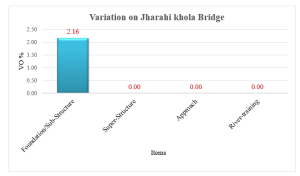
Figure 06: Variation % on Jharahi khola bridge project
Table 19: Variation on Kerunge khola bridge project
| S.N. | Description of items | Original Cost (NRs) | Revised cost after V.O. (NRs) | Variation Amount (NRs) | Variation % w.r.t. total cost |
| 1 | General | 2,025,000.00 | 2,025,000.00 | – | – |
| 2 | Foundation works | 11,599,019.50 | 15,106,420.38 | 3,507,400.88 | 4.45 |
| 3 | Sub-Structure works | 12,586,427.40 | 12,879,656.40 | 293,229.00 | 0.37 |
| 4 | Super- Structure works | 40,052,986.05 | 40,052,986.05 | – | – |
| 5 | Approach Road | 6,569,091.00 | 6,569,091.00 | – | – |
| 6 | River training works | 5,725,800.00 | 6,654,600.00 | 928,800.00 | 1.18 |
| 7 | Miscellaneous works | 220,000.00 | 220,000.00 | – | – |
| Total | 78,778,323.95 | 83,507,753.83 | 4,729,429.88 | 6.00 |
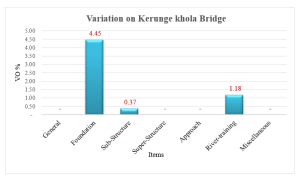
Figure 07: Variation % on Kerunge khola bridge project
Table 20: Variation on Tinau river bridge project
| S.N. | Description of items | Original Cost (NRs) | Revised cost after V.O. (NRs) | Variation Amount (NRs) | Variation % w.r.t. total cost |
| 1 | Foundation works | 22,804,254.41 | 18,328,376.56 | (4,475,877.85) | -7.52 |
| 2 | Sub-Structure works | 5,340,836.22 | 4,770,889.37 | (569,946.85) | -0.96 |
| S.N. | Description of items | Original Cost (NRs) | Revised cost after V.O. (NRs) | Variation Amount (NRs) | Variation % w.r.t. total cost |
| 3 | Super- Structure works | 19,502,272.30 | 15,817,240.65 | (3,685,031.65) | -6.19 |
| 4 | Approach Road | 651,126.73 | 1,441,059.00 | 789,932.27 | 1.33 |
| 5 | River training works | 5,562,500.00 | 9,740,606.00 | 4,178,106.00 | 7.02 |
| 6 | Miscellaneous works | 5,650,000.00 | 5,650,000.00 | – | 0.00 |
| Total | 59,510,989.66 | 55,748,171.58 | (3,762,818.08) | -6.32 |
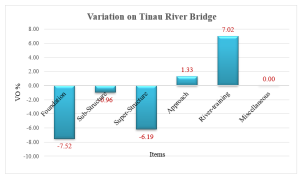
Figure 08: Variation % on Tinau river bridge project
Table 21: Impact of variation order on project cost
| S.N. | Name of Project | Contract Amount (NPR) | Revised Amount after VO (NPR) | Variation Amount (NPR) | Variation % |
| 1 | Rohini River Bridge, Rupandehi | 152,300,184 | 170,996,585 | 18,696,400 | 12.28 |
| 2 | Danav River Bridge Butwal-13 & 14, Rupandehi | 113,434,753 | 116,463,130 | 3,028,377 | 2.67 |
| 3 | Danav River Bridge Tamnagar, Rupandehi | 143,787,454 | 139,951,298 | (3,836,156) | -2.67 |
| 4 | Jharahi khola Bridge, Nawalparasi | 59,189,752 | 60,469,752 | 1,280,000 | 2.16 |
| 5 | Kerunge Khola Bridge, Nawalparasi | 78,778,324 | 83,507,754 | 4,729,430 | 6.00 |
| 6 | Tinau River Bridge, Rupandehi | 59,510,990 | 55,748,172 | (3,762,818) | -6.32 |
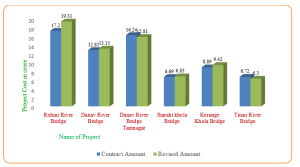
Figure 09: Contract cost & revised cost of projects
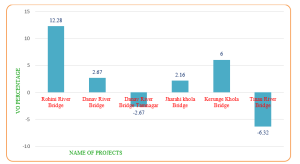
Figure 10: Cost variation of projects
Table 22: Impact of variation order on project duration
| S.N. | Name of Project (Contract No) | Contract Project duration (Months) | Actual Project duration (Months) | Variation Project duration (Months) | Variation % |
| 1 | Rohini River Bridge, Rupandehi (DROBTL/3371574/2073/074/248) | 37 | 43 | 6 | 16.21 |
| 2 | Danav River Bridge Butwal-13 & 14, Rupandehi (DROBTL/3371574/2073/074/317) | 35 | 42 | 7 | 20.00 |
| 3 | Danav River Bridge Tamnagar, Rupandehi (DROBTL/3371574/2073/074/247) | 37 | 43 | 6 | 16.21 |
| 4 | Jharahi khola Bridge, Nawalparasi (91/065/66) | 36 | 136 | 100 | 277.78 |
| 5 | Kerunge Khola Bridge, Nawalparasi (DROBTL/3371574/2072/073/106) | 41 | 51 | 10 | 24.39 |
| 6 | Tinau River Bridge, Rupandehi (91/068/069) | 35 | 100 | 65 | 185.71 |
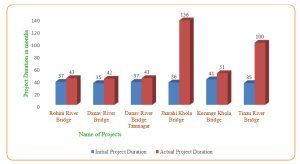
Figure 11: Initial & actual project duration
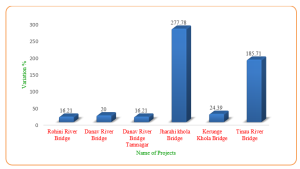
Figure 12: Variation % on time of projects
Table 23: Comparison of cost variation % and time variation % of projects
| S.N. | Projects | Cost variation % | Time variation % |
| 1 | Rohini River Bridge, Rupandehi | 12.28 | 16.22 |
| 2 | Danav River Bridge, Rupandehi | 2.67 | 20.00 |
| 3 | Danav River Bridge Tamnagar, Rupandehi | -2.67 | 16.22 |
| 4 | Jharahi khola Bridge, Nawalparasi | 2.16 | 277.78 |
| 5 | Kerunge Khola Bridge, Nawalparasi | 6.00 | 24.39 |
| 6 | Tinau River Bridge, Rupandehi | -6.32 | 185.71 |
Table 24: Frequency of recommended strategies from the clients group
| S.N. | Recommendations to minimize variation orders | Clients (N=36) | |
| RII | Rank | ||
| 1 | Carry out detail site investigation including detail soil investigations | 0.97 | 1 |
| 2 | Thorough review of designs, drawings and plans before tendering stage | 0.93 | 2 |
| 3 | Preparation of good estimate and tender documents on pre-tender planning phase | 0.92 | 3 |
| 4 | The consultant should co-ordinate closely at design stage | 0.92 | 3 |
| 5 | Adequate planning by all involved parties before work. | 0.90 | 5 |
| 6 | Design of project by experienced & knowledgeable personnel | 0.89 | 6 |
| 7 | Site clearance completed before awarding contracts | 0.87 | 7 |
| 8 | Clients should provide a clear brief of the scope of works | 0.83 | 8 |
| 9 | Well financial planning | 0.82 | 9 |
| 10 | Supervise the works with an experienced and dedicated personnel | 0.81 | 10 |
| 11 | Get accurate information and research with regard to procurement procedure, material and plant | 0.80 | 11 |
| 12 | Enhance good relation & communication between all parties | 0.76 | 12 |
| 13 | Negotiation of change orders by knowledgeable persons | 0.74 | 13 |
| S.N. | Recommendations to minimize variation orders | RII | Rank |
| 14 | Make no changes to the specifications before project completion | 0.71 | 14 |
Table 25: Frequency of recommended strategies from the contractors’ representatives
| S.N. | Recommendations to minimize variation orders | Contractor Group (N=24) | |
| RII | Rank | ||
| 1 | Carry out detail site investigation including detail soil investigations | 0.92 | 1 |
| 2 | Thorough review of designs, drawings and plans before tendering stage | 0.92 | 1 |
| 3 | Preparation of good estimate and tender documents on pre-tender planning phase | 0.89 | 3 |
| 4 | Adequate planning by all involved parties before work. | 0.89 | 3 |
| 5 | Design of project by experienced & knowledgeable personnel | 0.88 | 5 |
| 6 | Clients should provide a clear brief of the scope of works | 0.84 | 6 |
| 7 | The consultant should co-ordinate closely at design stage | 0.83 | 7 |
| S.N. | Recommendations to minimize variation orders | RII | Rank |
| 8 | Site clearance completed before awarding contracts | 0.83 | 7 |
| 9 | Get accurate information and research with regard to procurement procedure, material and plant | 0.82 | 9 |
| 10 | Supervise the works with an experienced and dedicated personnel | 0.78 | 10 |
| 11 | Well financial planning | 0.77 | 11 |
| 12 | Enhance good relation & communication between all parties | 0.73 | 12 |
| 13 | Make no changes to the specifications before project completion | 0.71 | 13 |
| 14 | Negotiation of change orders by knowledgeable persons | 0.70 | 14 |
Table 26: Summary of correlation test on the ranking of recommended strategies of variation order
| S.N. | Respondents | (ρ)=1- 6*∑d^2/(n*(n^2-1) | Relation of the respondents | Direction |
| 1 | Client Vs Contractor | 0.92 | Strong | Positive |
- Null Hypothesis (H0) = There is no monotonic relationship between the clints’ view and the contractor representatives’ view (i.e. ρ = 0) on the control measures to minimize the variation order on bridge projects [16].
- Alternate Hypothesis (H1) = There is monotonic relationship between the clints’ view and the contractor representatives’ view (i.e. ρ ≠ 0) on the control measures to minimize the variation order on bridge projects [17].
- Level of significance (α) = 0.05
- Critical value for 5% level of significance for two tailed tests with degree of freedom 12 (T critical) = 2.179
- Calculated value of T-statistics = ρ × √N−2 √1−𝜌2 = 8.51
- Calculated P-value for degree of freedom (dof) 12 with above obtained T-statistics (P-value) =0.0000019.
- Result and decision: Here, P-value < α, hence, reject the null hypothesis (H0) and accept the alternate hypothesis (H1). Therefore, it is concluded that there is monotonic relationship between the clints’ view and the contractor representatives’ view on control measures to minimize the variation order on bridge projects.
Table 27: Overall frequency of recommendations to minimize variation order
| S.N. | Recommendations to minimize variation orders | Overall (N=60) | |
| RII | Rank | ||
| 1 | Carry out detail site investigation including detail soil investigations
|
0.95 | 1 |
| S.N. | Recommendations to minimize variation orders | RII | Rank |
| 2 | Thorough review of designs, drawings and plans before tendering stage | 0.92 | 2 |
| 3 | Preparation of good estimate and tender documents on pre-tender planning phase | 0.91 | 3 |
| 4 | Adequate planning by all involved parties before work. | 0.90 | 4 |
| 5 | Design of project by experienced & knowledgeable personnel | 0.89 | 5 |
| 6 | The consultant should co-ordinate closely at design stage | 0.88 | 6 |
| 7 | Site clearance completed before awarding contracts | 0.85 | 7 |
| 8 | Clients should provide a clear brief of the scope of works | 0.84 | 8 |
| 9 | Get accurate information and research with regard to procurement procedure, material and plant | 0.81 | 9 |
| 10 | Well financial planning | 0.80 | 10 |
| 11 | Supervise the works with an experienced and dedicated personnel | 0.80 | 11 |
| 12 | Enhance good relation & communication between all parties | 0.75 | 12 |
| 13 | Negotiation of change orders by knowledgeable persons | 0.72 | 13 |
| 14 | Make no changes to the specifications before project completion | 0.71 | 14 |
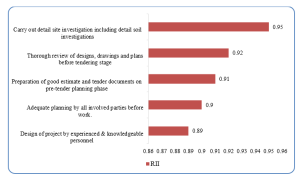
Figure 13: Top five strategies to minimize variation order
| S.N. | Questions | Perception of Interviewee |
| 1 | From your experience, what are the causes of variation orders on bridge projects? | · Lack of detail survey & soil investigation
· Design changes and modification · Poor estimation of projects · Differing site condition · Unforeseen problems on site · Lack of communication between parties · Political parties’ pressure/Local people demand · Land Acquisition problem |
| 2 | What are the various impacts of variation orders on bridge projects? | · Increase in project cost
· Completion schedule delay · Disputes among the professionals · People are deprived from facilities |
| 3 | What do you suggest to minimize the variation orders on bridge projects? | · Prepare complete design drawing and contract document before tendering
· Carry out detail site investigation · Forecast unforeseen situations before tendering · Site should be cleared before tendering · There should be communication between parties · There should be group discussion with users at survey stage. |
From the KII eight (8) causes of variation orders in answering the first question, four (4) impacts of variation orders for the second question and six (6) strategies to minimize variation orders in answering the third question were identified. The findings from the interview revealed that lack of detailed survey & soil investigation, design changes and modification, poor estimation of projects, differing site conditions, unforeseen problems on site, lack of communication between parties, political parties’ pressure/local people’s demand and land acquisition problems were the causes which contributed to the occurrence of variation orders. As identified from the interview, the impacts of variation orders which frequently occur on bridge projects were increase in project cost, completion schedule delay, disputes among the professionals and peoples being deprived of facilities [18]. According to the interviewee, preparing complete design drawings and contract documents before tendering, carry out detailed site investigation, forecasting unforeseen situations before tendering, site should be cleared before tendering, there should be communication between parties and group discussion with users at the survey stage can minimize variation orders on bridge projects. The above points from KII support the result obtained from the questionnaire survey [19,20].
- CONCLUSION
Based on the results and discussions, the following conclusions are made: According to perception of representatives from clients and contractors, the top five causes of variation order on bridge projects were poor investigation of site, change in design during construction, poor estimation of project, lack of strategic planning /inadequate planning and differing site conditions. Poor investigation of site, poor estimation of project, change in design during construction, differing site conditions and local residents’ pressure were the most significant cause of variation that were found from case study. According to the interviewee lack of detailed survey & soil investigation, design changes and modifications, poor estimation of projects, differing site conditions, unforeseen problems on site were the causes that contributed to the variation order. From questionnaire, case study and key informant interview it was concluded that poor investigation of site, change in design during construction, poor estimation of project, lack of strategic planning /inadequate planning, differing site conditions were the major causes of variation order on bridge projects. Regarding to combined views of representatives from client and contractors it was found that time overrun, increase in project cost, disputes between parties to the contract, progress affected, additional payments were the top five major impact of variation order on bridge projects. From the case study of six projects namely Rohini River Bridge, Danav River Bridge, Danav River Bridge Semlar, Jharahi Khola Bridge, Kerunge Khola Bridge and Tinau River Bridge were exposed to variation orders amounting to 12.28%, 2.67, -2.67%, 2.16%, 6.00% and -6.32 of the contract amount respectively. As it was analyzed, Rohini River Bridge, Danav River Bridge, Danav River Bridge Semlar, Khola Bridge, Kerunge Khola Bridge and Tinau River Bridge experienced time overruns of 16.21%, 20.00%, 16.21%, 277.78%, 24.39% and 185.71% of the contract schedule respectively. The completion time of all bridge projects under consideration are found to have exceeded on the initial contract period. Cost overrun is found on most of the projects and few of them are found to decrease in project cost due to variation. From a case study it is concluded that variation orders not only increase project costs but also decrease the cost of projects. The interviewee indicated that variation orders adversely impacted cost and time. Therefore, it is concluded that the major impacts of variation orders on bridge projects were time overrun, increase in project cost, disputes between parties to the contract, progress affected, additional payments for the contractor. Regarding to combined views of representatives from client and contractors, it was concluded that carry out detail site investigation including detail soil investigations, thorough review of designs, drawings and plans before tendering stage, preparation of good estimate and tender documents on pre-tender planning phase, adequate planning by all involved parties before work and design of project by experienced & knowledgeable personnel were the best five strategies recommended to minimize variation orders on bridge projects. As per the views of the interviewee, preparing complete design drawings and contract documents before tendering, carrying out detailed site investigation, forecast unforeseen situations before tendering, site should be cleared before tendering were the best preventive measures to minimize the variation order on bridge projects.
REFERENCES
- Acharya, N., Lee, Y. & Im, H., 2006. Design Errors: Tragic for the Clients. Journal of Construction Research, 7(1/2), pp. 177-190.
- Arain, F., 2005a. Strategic Management of Variation Orders for Institutional Building: Leveraging on Information Technology. Toronto, Canada, PMI Global Congress proceedings.
- Arain, F. & Pheng, L., 2005b. How design consultants perceive potential causes of variation orders for institutional buildings in Singapore. Architectural Engineering and Design Management, 1(3), pp. 181-196.
- Arain, F. & Pheng, L., 2006. Developers’ views of potential causes of variation orders for institutional buildings in Singapore. Architectural Science Review, 49(1), pp. 59-74.
- Charoenngam, C., Coquinco, S. T. & Hadikusumo, B., 2003. Web-based application for managing change orders in construction projects. Construction Innovation, 3(4), pp. 197-215.
- Department of Road, 2077. Annual Progress Report, Kathmandu: Department of Road.
- Dhakal, U., 2021. A Study on Causes and Impacts of Variation Order in Hydropower Projects- A Case Study of Selected Small Size Private Hydropower Projects in Nepal. s.l.:Nepal Engineering College, Pokhara University.
- Enshassi, A., Arain, F. & Al-Raee, S., 2010. Causes of variation orders in construction projects in the Gaza Strip. Journal of Civil Engineering and Management, 16(4), pp. 540-551.
- Finsen, F., 2005. The Building Contract – A Commentary on the JBCC Agreements. 2nd ed. Kenwyn: Juta & Co, Ltd.
- Formoso, T., Isatto, E. & Hirota, E., 1999. Method for Waste Control in the Building Industry. Berkeley, CA, USA, University of California.
- George, D. & Mallery, P., 2003. SPSS for Windows step by step: A simple guide and reference. 4th ed. Boston: Allyn & Bacon.
- Halwatura, R. & Ranasinghe, N., 2013. Causes of Variation Orders in Road Construction Projects. Hindawi Publishing Corporation, Volume 2013, pp. 1-7.
- Hanna, A., Calmic, R., Peterson, P. & Nordheim, E., 2002. Quantitative Definition of Projects Impacted by Change Orders. Journal of Construction Engineering and Management, 128(1), pp. 57-64.
- Harbans, S., 2003. Valuation of Varied Work: A Commentary. The Board of Engineers Malaysia, 20(3), pp. 32-42.
- Ibbs, C., 1997. Quantitative Impacts of Project Change: Size Issues. Journal of Construction Engineering and Management, 123(3), pp. 308-311.
- Ibbs, C., Kwak, Y. & Wong, C., 2001. Project Change Management System. Journal of Management in Engineering, 17(3), pp. 159-165.
- Kalkani,, K. & Malek, S., 2016. Analyzing causes of delay in construction projects. International Journal for Innovative Research in Science and Technology, 2(12), pp. 136-141.
- Kelly, J. & Male, S., 2002. 2002, ‘Value Management’ in Kelly, J, Morledge, R & Wilkinson, S,. in Kelly, J, Morledge, R & Wilkinson, S, ed. s.l.:Oxford: Blackwell Publishing.
- Khanal, S., 2020. A Study of Impact of Variation Order on Project Cost and Time of Building Construction (A CaseStudy of Building Projects Inside Tribhuvan University Premises, Kathmandu). s.l.:Nepal Engineering College, Pokhara University, Nepal.
- Koushki, P., Al-Rashid, K. & Kartam, N., 2005. Delays and cost ncreases in the construction of private residential projects in Kuwait. Construction Management and Economics, 23(3), pp. 285-294.
Publication History
Submitted: October 31, 2024
Accepted: November 22, 2024
Published: March 31, 2025
Identification
D-0596
DOI
https://doi.org/10.71017/djnsi.4.5.d-0596
Citation
Dhan Bahadur Budha & Khimananda Panthi (2025). Analysis of Variation Order on Bridge Construction Projects under Department of Road: (A Case Study of Road Division Office, Rupandehi). Dinkum Journal of Natural & Scientific Innovations, 4(05):291-312.
Copyright
© 2025 The Author(s).