

Publication History
Submitted: February 16, 2025
Accepted: March 02, 2025
Published: April 31, 2025
Identification
D-0582
DOI
https://doi.org/10.71017/djnsi.4.4.d-0582
Citation
Bigyan Gautam (2025). Study of Production Economics and Obstacles of Potato Farming in ACHHAM district, Nepal. Dinkum Journal of Natural & Scientific Innovations, 4(04):220-228.
Copyright
© 2025 The Author(s).

220-228
Study of Production Economics and Obstacles of Potato Farming in ACHHAM district, NepalOriginal Article
Bigyan Gautam 1*
- Institute Of Agriculture and Animal Science, Tribhuvan University, Nepal.
* Correspondence: bigyangautam322@gmail.com
Abstract: Potatoes are a major food crops in Nepal. Potatoes can help reduce the need to import expensive grains, fight poverty, and improve food security. However, there haven’t been enough scientific studies on how different demographic and socio-economic factors affect potato production, productivity, and profitability. This study evaluated how profitable potato farming is and to understand what factors influence potato production in the ACHHAM district. The study focused on potato production in five municipalities of ACHHAM. Firstly, Municipalities and rural municipalities were purposively selected, and then from each municipality 20 respondents were randomly selected giving us a total of 100 farmers. Primary and secondary sources were employed during data collection. The collected data were entered into MS Excel 2021 and analysis was carried out by using the Statistical Package for Social Sciences (SPSS) version 26. Mixed method approach of research was used to conduct research. The socio-economic analysis revealed the majority of respondent belong to average age of 41yrs and male by gender. The average year of schooling was 6 years. The benefit cost ratio was found to be 1.66 that revealed that solvency of the potato farming, with average gross profit Rs. 4,999 per Rupani. The problem ranking table shows insects and pest as major problems among various problems listed. The productivity and benefit-cost (BC) ratio suggest a significant need for technological and policy interventions to commercialize potato production in ACHHAM District. Rapid dissemination of applicable technologies, such as high-yielding resistant cultivars, scientific production packages, sustainable disease and pest management strategies, and the establishment of storage facilities, is essential. Additionally, policies based on farmer participation should be developed and implemented to enhance production and productivity.
Keywords: potato, profitable, b/c ratio, dissemination, determinants
- INTRODUCTION
Since the development of civilization, agriculture has been the way of living to the mankind. Agriculture is the main stay of Nepal’s economy. Nepal being a diverse country occupies various climate, geographical structures and cultivable land which facilitate the practices of several Agro-enterprises in different ecological zones. Agriculture sector has been considered the most important sector in Nepalese economy. Nepal exhibits a predominant subsistence agrarian economy with agriculture contributing 23.95% to country’s Gross Domestic Product (GDP) [1]. Its production is popular in the region because of its greater adaptability, high yield potential, and high demand, contributing 6.57 percent to AGDP and 2.17 percent to GDP, respectively. Potatoes have previously been regarded a suitable alternative for improving the nutrition and health of rural populations, as they are more productive than cereal grains and have a positive net worth than cereals. Potatoes are widely grown in Nepal, from the southern Terai at 100 meters above sea level (Masl) to the northern Himalayas at 4000 meters Masl. In Nepal, it is grown on 197,037 hectares (ha) with a yield of 13.13 metric tons per hectare and a total production of 2,586,287 metric tons [2]. In the Terai, potatoes are used as a supplement to vegetables, however in the Hill and Mountain regions, they are a staple meal. Potato (Solanum tuberosum) is a perennial herbaceous in nature which has height up to 0.4-1.4 m tall and it has prostate to semi erect structure of plant [3]. Stem may be hairless to densely hairy with purple green or mottled green in colour. It has a single bear terminal leaflet with three to four large ovoid leaves [4]. According to Wikipedia, ACHHAM district is the part of karnali province with Mangelsen as its administrative headquarters. It lies in the area of 1,692 km2. It had a population of 2,28,852 with population density of 136.2/km2. It comprises of 4 municipalities namely Mangelsen municipality, Safe Bagar municipality, Kamal bazar municipality, panchadewal Binayak municipality. It gets minimum rainfall as it lies to the north of Himalayans which blocks the monsoon air. It comprises of different climate viz. Subtropical (0.3%), temperate (3.7%), subalpine (14.6%), alpine (13.9%), nival (25.4%) and Trans-Himalayan (42.1%) respectively. Potato was ranked fifth in area, second in production and first in productivity among major food crops grown in Nepal [5]. The productivity of potato in Nepal is 16.02 Mt/ha. Potato is considered as one of the fourth most important crops in the world after wheat, rice and maize. In Nepal, potato is the fifth most an important crop after rice, wheat, maize and millet. Potato production has provided farmers with good income and has maintained itself as a nutrient source as potatoes are rich in carbohydrates and Vitamin C [6]. Potato cultivation also is an untapped potential source of export earning, rural employment and economic growth for small farmers [7]. Since potato has been the important vegetable crop in the terai [8] and main staple crop of Himalayas and high mountainous region above 2000m altitude as climatic condition is favourable for production of potato, thus the increment has also been caused by the extension of Prime Minister Agriculture Modernization Project for the development and promotion of potato cultivation in different districts including Karver and Dadeldhura [9]. So, potato is considered as important cash crop to address poverty and support livelihood of rural farmers in developing countries like Nepal. Its cultivation is popular among farmers due to its wider adaptability, high yield potential and high demand which contributes about 6.57 and 2.17% in AGDP and GDP, respectively [10]. Production economics in agriculture focuses on understanding how resources are used to produce crops efficiently and profitably. It involves studying the relationship between input costs (like seeds, fertilizers, labor, water, as well as machinery) and the output or yield of a crop. The goal of production economics is to maximize output while minimizing costs, helping farmers make informed decisions about how to allocate resources to achieve the best possible return [11]. In potato farming, production economics is crucial because it helps farmers understand how to optimize factors like seed variety, irrigation, pest management, and soil fertility to increase yields. For example, choosing a high-quality seed or investing in proper irrigation systems can significantly impact productivity and profit. However, the economic success of potato farming depends not only on efficient production but also on market conditions, including price fluctuations, demand, and transportation costs [12]. A key concept in production economics is the law of diminishing returns. This principle states that after a certain point, adding more of one input (like fertilizers) will lead to smaller increases in output. Understanding this helps farmers avoid wasting resources by overusing inputs, which could reduce profitability. Farmers must also consider risk factors such as weather, pests, and diseases, which can affect production. Effective planning and resource management, based on production economics principles, can help mitigate these risks and improve the overall sustainability and profitability of potato farming [13]. Potato farming in ACHHAM, Nepal, is hindered by several significant challenges that negatively impact productivity and economic viability. Traditional farming methods prevail, with minimal adoption of modern agricultural practices and technologies, leading to inefficiencies and low yields. Farmers have limited access to quality seeds and essential inputs like fertilizers and pesticides, resulting in poor crop health and increased susceptibility to pests and diseases. Insufficient irrigation facilities exacerbate the situation, making potato farming heavily reliant on unpredictable rainfall. Additionally, poor transportation and market infrastructure restrict farmers’ ability to sell their produce at fair prices, causing economic losses. The region also suffers from a lack of agricultural extension services and training opportunities, which limits farmers’ knowledge of improved farming practices and effective crop management. Addressing these issues is crucial for enhancing food security, economic stability, and sustainable agriculture in ACHHAM. Potato is one of the important crops in the district having potential for production. Majority of the farmers in the research area are subsistence and do not keep the records of the business. This study is helpful for the growers for allocating resources for Potato production. This study will be conducted to analyze the declination of production of potato, their causes and their consequences. The study is to comprehensively understand the Production Economics and Problems of Potato Farming in ACHHAM District, Nepal.
- MATERIALS AND METHODS
ACHHAM covers an area of 1,692 square kilometers (653 sq mi) and located at Latitude: 280°46’ North to 290°23′ North and Longitude: 810°32 East to 810°35′ East. 90% area of ACHHAM is mid-hill and 10% is high-hill. The maximum elevation of the district is 3,820 meters (12,530 ft) and minimum elevation is 540 meters (1,770 ft) from the sea level. The district is surrounded by Bajura District in the North, Doti District in the West, Dailekh District in the East and Surkhet District in the South. The district has population of 229,816 with density of 2.9 per square km involving 94.73% in the agriculture with total land area of 2246 sq.km [14]. The study was conducted in Saphe Bagar, Mellekh, Rama Roshan, Bannigadhi, Mangelsen municipality. A total of 100 potato growers were selected by simple random sampling techniques to draw a representative sample. Due to the impracticality of collecting data from the entire farming population, a representative sample was drawn to capture the characteristics and trends within the larger population. The sample size and variation are essential factors that affect the accuracy and representativeness of survey data. To ensure that this sample accurately reflected the target population, a purposive random sampling approach was used to select potato farmers within the designated potato-growing command area. The research employed a mixed-method approach to collect both primary and secondary data. Primary data was gathered through structured interview schedules, which were pre-tested and adjusted for clarity. Additionally, data collection was supplemented with Focus Group Discussions (FGDs) and Key Informant Interviews (KIIs) to gain deeper insights and validate responses. A total of 80 potato growers from the study area were surveyed in-depth using structured interviews, providing quantitative and qualitative data. Secondary data was collected from existing literature, reports, bulletins, and publications from sources such as the Ministry of Agriculture and Livestock Development (MOALD), National Agriculture Research Council (NARC), Agriculture Knowledge Centre, and Prime Minister Agriculture Modernization Project (PMAMP). These sources provided historical, comparative, and context-specific information. Several research tools were employed to collect data, including household surveys, FGDs, KIIs, field observations, Rapid Market Appraisals (RMA), and case studies. Structured interviews with pre-tested schedules were conducted with 100 potato growers to collect quantitative data on production costs, yields, and market behavior. These discussions engaged diverse participants, including farmers, local leaders, and representatives from various ethnic backgrounds and genders, to ensure inclusivity. FGDs helped capture additional insights on potato production and marketing. KIIs were held with progressive farmers, cooperative staff, and local traders using semi-structured checklists, allowing for in-depth discussions on production challenges, marketing strategies, and resource availability. The market potential for potatoes in ACHHAM was assessed through RMA by interviewing local grocers, who were selected using simple random sampling. These interviews explored aspects like potato buying rates, pricing mechanisms, and cost structures. Detailed case studies were conducted with successful potato farmers, wholesalers, and retailers in the study area. These case studies provided insights into best practices and strategies employed by large-scale producers. The collected qualitative and quantitative data were analyzed using statistical software such as SPSS, STATA and Microsoft Excel. Descriptive statistics, including graphs and charts, were utilized to present the data. Quantitative analysis provided a basis for identifying trends and relationships, while qualitative data offered contextual depth, helping to interpret statistical results more meaningfully.
- RESULT & DISCUSSION
Table 01: Socio Economic and Demographic parameters
| Variables | min | Max | mean |
| Age(yrs) | 23 | 87 | 41.20 |
| Years of Schooling (yrs) | 0 | 16 | 5.78 |
| Farm size(ha) | 0.25 | 2.54 | 1.69 |
| Annual income (Rs) | 90000 | 400000 | 174400.00 |
The socio-economic study revealed that the average age of respondent was 41 years while maximum age of respondent was found to be of 87 and minimum age was found to be of 23 years. Average Years of schooling was found to be 6 years while maximum and minimum years of schooling was found to be 16 and 0 years respectively. Average farm size was found to be 1.69 ha while maximum was 2.54 ha and minimum was found to be 0.25 ha. Average Annual Income was Rs. 174400. Here, minimum annual income was found to be 90000 and maximum was recorded 400000.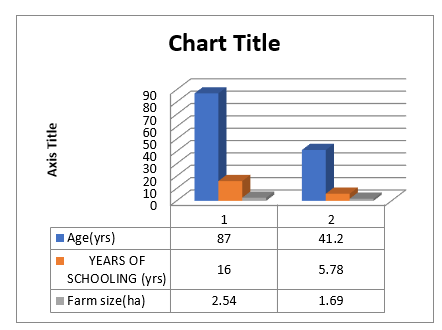
Figure 01: Socio-economic study
Table 02: Socio-Economic and Demographic parameters
| Variable | Frequency | Percent |
| Gender | ||
| Male | 62 | 62.0 |
| Female | 38 | 38.0 |
| Training | ||
| Yes | 10 | 10.0 |
| No | 90 | 90.0 |
| Caste Distribution | ||
| Brahmin | 16 | 16.0 |
| Cheetri | 73 | 73.0 |
| Janajati | 7 | 7.0 |
| Dalit | 4 | 4.0 |
| RELIGION | ||
| Hindu | 95 | 95.0 |
| Christian | 5 | 5.0 |
| Family Type | ||
| Joint | 17 | 17.0 |
| Nuclear | 83 | 83.0 |
| Main Occupation | ||
| Agriculture | 75 | 75.0 |
| Services | 12 | 12.0 |
| Others | 13 | 13.0 |
| Scale of Farm | ||
| Small scale | 29 | 29.0 |
| Large scale | 71 | 71.0 |
The table provides a demographic breakdown of the study participants, highlighting various socio-economic and demographic factors. In terms of gender, the majority of respondents were male (62%), while females comprised (38%). When considering training, only a small proportion of the participants (10%) reported having received any training, while the vast majority (90%) had not. This could indicate limited access to or participation in training programs in the community. The caste distribution shows that most respondents were from the Chettri caste (73%), followed by Brahmins (16%), Jannatis (7%), and Dalits (4%). This suggests that the sample is heavily skewed towards certain caste groups, with lower representation from marginalized communities. Religiously, almost all participants identified as Hindu (95%), with a small minority (5%) identifying as Christian. This reflects the dominant religious affiliation in the area. In terms of family structure, a significant majority (83%) of respondents reported living in nuclear families, while 17% lived in joint family arrangements. Regarding occupation, most participants were engaged in agriculture (75%), with smaller proportions working in services (12%) or other occupations (13%). This indicates that agriculture remains the primary source of livelihood for the majority of the population. Finally, when it comes to the scale of farming, 71% of the respondents operated large-scale farms, while 29% were involved in small-scale farming. This suggests a concentration of agricultural activity in larger farming operations within the sample group. Overall, the data highlight significant gender disparities, limited access to training, and a strong reliance on agriculture as the main occupation, with a noticeable divide between small and large-scale farming.
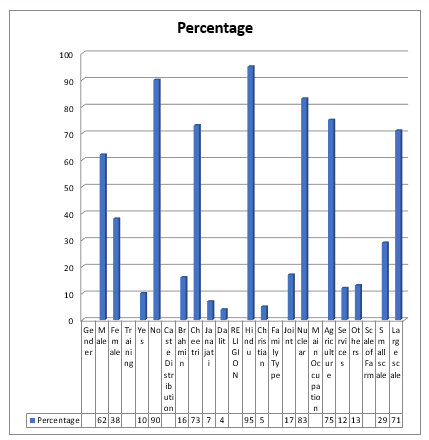
Figure 02: Socio-Economic and Demographic study
| Variables | Total value | Rank |
| Insects and pests | 102.6 | 1 |
| Lack of input availability | 94 | 4 |
| Lack of Irrigation | 98.02 | 2 |
| Lack of technical knowhow | 93 | 5 |
| Lack of infrastructure | 97.14 | 3 |
The data indicates that insects and pests are the most significant challenge, with a total value of 102.6, ranking first among the listed issues. This suggests that pest management is a major concern for the participants, likely affecting crop yields and overall agricultural productivity. The second most pressing issue is the lack of irrigation (98.02), which highlights water scarcity or inadequate irrigation infrastructure as a critical constraint for the farmers. Water management appears to be a significant limitation in ensuring consistent crop production. Ranking third is the lack of infrastructure (97.14), indicating that physical and logistical barriers, such as poor transportation or inadequate storage facilities, hinder agricultural efficiency and market access. Lack of input availability (94) ranks fourth, pointing to difficulties in obtaining essential resources such as seeds, fertilizers, or equipment. This could affect the ability of farmers to enhance productivity and adopt modern farming practices. Finally, lack of technical knowhow (93) is ranked fifth, suggesting a gap in knowledge or skills among farmers. Limited access to training or agricultural education may be preventing them from utilizing best practices or advanced techniques that could improve their yields and profitability. Overall, the data reflect a complex interplay of environmental, infrastructural, and knowledge-based challenges that impede agricultural development in the study area. Addressing these issues would require a multifaceted approach, focusing on pest control, irrigation improvement, infrastructure development, better access to inputs, and farmer education.
| variable cost (Rs.) | 6,913.51 |
| fixed cost (Rs.) | 609.00 |
| total cost (Rs.) | 7,522.51 |
| quantity (kg) | 350 |
| Price (Rs.) | 37.00 |
| total revenue/production (Rs.) | 12,950.00 |
| gross margin (Rs.) | 5,427.49 |
| b/c ratio | 1.72 |
The total variable cost is Rs. 6,913.51, which includes expenses that fluctuate with the level of production, such as labor, materials, and inputs. The fixed cost, which remains constant regardless of production levels, is Rs. 609.00. The total cost of production amounts to Rs. 7,522.51. The quantity produced is 350 kg, and with a price of Rs. 37.00 per kg, the total revenue generated from production is Rs. 12,950.00. This results in a gross margin of Rs. 5,427.49, calculated by subtracting the total cost from the total revenue. The positive gross margin indicates that the production process is profitable. The benefit-cost (B/C) ratio is 1.72, which shows that for every Rs. 1.00 invested in the production, Rs. 1.72 is returned. Since the B/C ratio is greater than 1, the production process is economically viable and generates a return higher than the cost, indicating profitability and efficiency in the operation. The B.C ratio was found to be 1.72, the similar result was found in ACHHAM district i.e. 1.47 by [15]. An author [16] had also found that B.C ratio was 1.59 in mustang District. This analysis shows that the production activity is not only covering its costs but also yielding a significant profit, suggesting that the current production methods of potato in ACHHAM district and market pricing are favorable.
Table 05: Cobb-Douglas productions Function
| Ln Revenue | Coef. | Std. Err. | t | P>t |
| Ln labor ha | 0.143881 | 0.724674 | 1.99 | 0.05 |
| Ln Animal labor | -0.06384 | 0.048168 | -1.33 | 0.188 |
| Ln traction | -0.06367 | 0.048168 | -1.4 | 0.166 |
| Ln seed | -0.24259 | 0.10902 | -2.23 | 0.029 |
| Ln manure cost | 0.413208 | 0.10954 | 0.8 | 0.428 |
| Ln Urea | 0.09177 | 0.917159 | 1 | 0.32 |
| Ln DAP | -0.1277 | 0.541258 | -0.24 | 0.814 |
| Ln potash | 0.125851 | 0.538081 | 0.23 | 0.816 |
| Ln tax | 0.161518 | 0.518193 | 3.12 | 0.002 |
| Ln Fixed cost | 0.396783 | 0.012189 | 3.26 | 0.002 |
| _cons | 6.93175 | 0.729529 | 9.5 | 0 |
| F (10,89) | 3.8 | |||
| prob>F | 0.003 | |||
| R-squared | 0.2992 | |||
| Adj R-squared | 0.2205 | |||
| Root MSE | 0.17683 |
Multi Collinearity test was carried out considering the variables where Variance Inflation factor (vif) value was less than 5 that suggest there is no multicollinearity and the model can be applied. The results of the Cobb-Douglas production function regression offer insights into the impact of various inputs on revenue. Labor per hectare has a positive and statistically significant effect on revenue, with a coefficient of 0.143. This indicates that a 1% increase in labor per hectare leads to a 0.14% increase in revenue, reflecting the importance of human labor in enhancing productivity. The t-value of 1.99 and a P-value of 0.05 shows that this relationship is significant at the 5% level, meaning labor is a key factor in determining output [17]. On the other hand, animal labor has a negative coefficient (-0.0638), implying that its use reduces revenue. However, this effect is not statistically significant, with a P-value of 0.188, suggesting that animal labor may not play a crucial role in production for this sample. Similarly, traction has a negative coefficient (-0.0637), but its effect is also not statistically significant (P-value of 0.166). These results suggest that mechanization or animal traction may not have a strong or beneficial impact on revenue in the current context. Seed costs show a significant negative effect on revenue, with a coefficient of -0.242 and a P-value of 0.029. This suggests that higher spending on seeds reduces revenue, potentially indicating inefficiencies in seed usage or over-investment without corresponding returns. Interestingly, the cost of manure has a positive but insignificant impact on revenue, with a coefficient of 0.413 and a P-value of 0.428. Similarly, fertilizers such as urea and DAP also show statistically insignificant effects on revenue, with P-values of 0.32 and 0.814, respectively. This could imply that either the usage of these inputs is not optimized or their impact is overshadowed by other factors in the production process [18]. On the other hand, taxes and fixed costs have significant positive impacts on revenue. Taxes (coefficient of 0.161) and fixed costs (coefficient of 0.396) both have significant effects with P-values of 0.002, indicating that increases in these costs are associated with higher revenues. This might be because farms that incur higher taxes and fixed costs are larger or more commercialized, leading to greater overall production. The overall model fit, as shown by the R-squared value of 0.2992, indicates that approximately 29.92% of the variation in revenue is explained by the independent variables. While this suggests a modest fit, the significant F-statistic (P-value of 0.003) confirms that the model is statistically significant. Similar result was found in ACHHAM that when labour cost increased by 1% percent would result increase in total returns from potato production by 0.163% [19].
- CONCLUSION
Potato farming in ACHHAM District, Nepal, has proven to be economically viable, with a Benefit-Cost (B.C.) ratio of 1.72, indicating that farmers earn Rs. 1.72 for every rupee invested. However, this sector faces several critical obstacles that limit its growth potential, including pest infestations, inadequate irrigation, restricted access to quality seeds and inputs, insufficient infrastructure, and a lack of technical knowledge among farmers. These challenges, despite the profitable nature of potato farming, suggest that targeted interventions could greatly enhance productivity and economic returns in the district. One significant approach to understanding the impact of these factors on production is through the Cobb-Douglas production function, a model that assesses the relationship between input costs and output. The analysis indicated that about 29% of the variation in economic returns from potato farming could be explained by key inputs, such as labor, taxes, fixed costs, and seed costs. Specifically, a 1% increase in labor costs was associated with a 0.14% increase in returns, while increases in taxes and fixed costs resulted in 0.16% and 0.03% increases, respectively. Conversely, a 1% increase in seed costs led to a 0.24% decrease in returns, highlighting the need to manage seed costs carefully to maximize profitability. These findings underline that labor and capital inputs are productive, whereas high seed costs have a detrimental impact on profitability. Addressing pest and disease control is critical, given that pest issues were ranked as the most significant challenge in ACHHAM. Introducing pest-resistant potato varieties, combined with integrated pest management (IPM) techniques, could greatly reduce crop losses. Additionally, improving irrigation infrastructure is essential to mitigate farmers’ heavy reliance on unpredictable rainfall. Support from local agencies or the government in building irrigation facilities or subsidizing irrigation equipment would provide farmers with a stable water source, which is crucial for consistent yields. Access to quality inputs like seeds, fertilizers, and pesticides should also be prioritized. Establishing local supply centers or cooperative purchasing initiatives could ensure these resources are both accessible and affordable, thereby addressing the negative impact of high seed costs identified in the Cobb-Douglas analysis. Beyond access, training programs are necessary to enhance farmers’ knowledge of modern, cost-effective agricultural practices. Through agricultural extension services, farmers could learn sustainable farming techniques and improve their resource management, leading to optimized input use and better returns. Infrastructure improvements, particularly in storage and transportation, are equally important. With adequate storage facilities, farmers can minimize post-harvest losses, allowing them to store produce until market conditions are favorable. Enhanced transportation networks would improve market access, enabling farmers to sell their crops at more competitive prices and expand their customer base. Finally, financial and policy support can play a transformative role. Government-provided subsidies, low-interest loans, and grants would empower farmers to adopt the technologies and inputs needed to boost productivity. Given the Cobb-Douglas model’s emphasis on the positive impacts of labor and fixed costs on profitability, these financial aids could encourage investments in labor and infrastructure, such as improved land preparation and storage facilities. In summary, potato farming in ACHHAM holds strong economic potential, yet is constrained by various obstacles. By adopting pest-resistant varieties, strengthening irrigation, ensuring affordable input access, and investing in infrastructure, farmers can enhance productivity and profitability. Financial support and targeted policy interventions will further enable farmers to adopt beneficial technologies, ultimately stabilizing their incomes and contributing to the district’s economic resilience. The insights from the Cobb-Douglas production function underscore the importance of optimizing input use, especially labor and capital investments, to achieve sustainable and profitable potato farming in ACHHAM District.
REFERENCES
- Ministry of Agriculture and Livestock Development (MOALD), (2021). Statistical information on Nepalese agriculture. Ministry of Agriculture and Livestock Development.
- Chandra Sapkota, S., Rokaya, R., Acharya, H., & Uprety, S. (2019). Symbiosis An Economic Analysis of Potato Production in AchhaM District of Nepal.
- Chambers, R. (1994). The Origins and Practice of Participatory Rural Appraisal. World Development, 22(7), 953-969.
- Devaux, A., Kromann, P., & Ortiz, O. (2014). Potatoes for sustainable global food security. Potato research, 57, 185-19
- Ghimire, N., Raj Gaire, K., & Adhikari, G. (2021). UNDERSTANDING THE COST OF CULTIVATION OF POTATO FROM THE PERSPECTIVE OF HOUSEHOLD HEAD (MALE OR FEMALE) IN PANAUTI VILLAGE OF KAVRE DISTRICT, NEPAL. SOCIO ECONOMY AND POLICY STUDIES, 1(1), 17–20.
- Kumar, R., & Pandey, R. (2018). Economic Evaluation of Potato Production in Northern India. Journal of Agricultural Economics, 58(2), 255-264.
- Maharjan, K. L., Sigdel, E. R., Sainju, M. M., & Thapa, G. B. (2015). Economic Assessment of Potato Farming in the Hills of Nepal. Asian Journal of Agricultural Research, 9(2), 55-64.
- Simtowe, F., Asfaw, S., Diagne, A., & Shiferaw, B. (2019). Determinants of Agricultural Technology Adoption: The Case of Improved Groundnut Varieties in Malawi. Journal of Agricultural Economics, 60(1), 87-103.
- Singh, B., Yadav, S., & Sharma, R. (2017). Participatory Rural Appraisal for Identifying Potato Production Constraints: A Case Study from India. International Journal of Agricultural Extension, 63(2), 189-198.
- Singh, B., Yadav, S., & Sharma, R. (2017). Participatory Rural Appraisal for Identifying Potato Production Constraints: A Case Study from India. International Journal of Agricultural Extension, 63(2), 189-198.
- Vanlauwe, B., Descheemaeker, K., Giller, K. E., Huising, J., Merckx, R., Nziguheba, G., … & Zingore, S. (2017). Integrated Soil Fertility Management in Sub-Saharan Africa: Unravelling Local Adaptation. Agricultural Systems, 153, 171-190.
- Aliyi, I., Faris, A., Ayele, A., Oljirra, A., & Bayessa, M. (2021). Profitability and market performance of smallholder vegetable production: evidence from Ethiopia. Heliyon, 7(9).
- Beattie, B. R., Taylor, C. R., & Watts, M. J. (1985). The economics of production.
- Chowdhury, M. D., & Chowdhury, A. H. (2015). Problems and prospects of potato cultivation in Bangladesh. Asian Business Review, 5(1), 28-32.
- GUILDING, C. (2010). Gross profit and net profit.
- Ministry of Agricultural Development (MOAD). (2016). Annual report 2016. Government of Nepal, Ministry of Agricultural Development.
- Timsina, K., Kafle, K., & Sapkota, S. (2011). Economics of potato (Solanum tuberosum L.) production in Taplejung district of Nepal.
- Sapkota, S. C., Rokaya, P. R., Acharya, H., & Uprety, S. (2019). Economic analysis of potato production in Achham district of Nepal. International Journal of Horticulture & Agriculture, 4(2), 1-9.
- Karki, A., Bhusal, N., Bhandari, N., Bastakoti, B., Shrestha, K., & Sharma, B. (2023). Economics of potato production in mustang district of Nepal. Journal of Agriculture and Environment, 59-67.
Publication History
Submitted: February 16, 2025
Accepted: March 02, 2025
Published: April 31, 2025
Identification
D-0582
DOI
https://doi.org/10.71017/djnsi.4.4.d-0582
Citation
Bigyan Gautam (2025). Study of Production Economics and Obstacles of Potato Farming in ACHHAM district, Nepal. Dinkum Journal of Natural & Scientific Innovations, 4(04):220-228.
Copyright
© 2025 The Author(s).