

Publication History
Submitted: March 04, 2025
Accepted: March 30, 2025
Published: April 31, 2025
Identification
D-0584
DOI
https://doi.org/10.71017/djnsi.4.4.d-0584
Citation
Santosh GC (2025). Experimental Analysis on Geotechnical Behaviors of Sub Grade Soil for Road Pavements on Addition of Water Hyacinth Ash. Dinkum Journal of Natural & Scientific Innovations, 4(04):247-257.
Copyright
© 2025 The Author(s).

247-257
Experimental Analysis on Geotechnical Behaviors of Sub Grade Soil for Road Pavements on Addition of Water Hyacinth AshOriginal Article
Santosh GC 1*
- Assistant Professor, Civil Department, Pokhara Engineering College, Pokhara, Nepal.
* Correspondence: santoshgc30@hotmail.com
Abstract: A road pavement consists of layer of pavement material supported by soil sub grade to support & serve a carriage way. Generally surfacing, base course and sub base course are three layers of road materials used for the construction of pavements. When the moisture content of soil increases in these layers of pavement due to rains, each layers become very soft & weak and starts deforming under heavy traffic load. This study evaluated the geotechnical behavior of soil with and without different proportion of water hyacinth stem ash and to analyses optimized proportion of water hyacinth stem ash with respect to California Bearing Ratio for the sub grade soil for road pavement. These studies are carried out on the basis of Indian Standard Code and specification. The addition of water hyacinth stem ash does not significantly modify the grain size distribution of the soil. It is important to understand how the water hyacinth stem ash modifies the physical parameter of the soil, which can influence the soil behavior and suitable for engineering uses. The values of liquid limit, plastic limit, and plasticity index is reducing with the increase of water hyacinth stem ash in soil mass. This decrease in plasticity index specifies that the soils have tendency to undergo bulky volume changes with changes in water content which has been stabilized. reduction in specific gravity might distress compaction and porousness, possibly influencing water movement and load-bearing capacity of traffic load built on the soil. The increase in optimum moisture content with higher ash content implies that more water is needed for optimal compaction. On the basis of findings, the study endorsed that 15 percentage of water hyacinth stem ash can be used for soil stabilization; this equilibrium among the constructive properties of the ash and potential problems confirms the anticipated upgrading in geotechnical properties without extreme use of the material.
Keywords: CBR, MDD & OMC, soil, stabilization, water stem, ash
- INTRODUCTION
Soil serves as the foundation for land-based construction projects and its behavior is crucial for providing support to any structures. Understanding soil characteristics and factors influencing soil behavior is essential for successful support of infrastructure. Soil stabilization involves improving soil engineering properties and behavior to ensure it can adequately support any structures. Stabilization is employed to enhance engineering qualities and durability of soils, which helps to prevent issues like foundation settlement [1]. Water hyacinth, despite being a challenge in aquatic environments, offers benefits due to its high fiber content and water absorbency. These characteristics could potentially be harnessed for soil improvement applications. Soil naturally experiences compression and volumetric instability. When clayey soil is chosen for construction of road pavement purposes, stabilization becomes necessary. Various methods, including soil reinforcement, are adopted to meet the mandatory engineering properties of the soil [2]. Among the soil stabilization techniques, soil stabilization through natural water hyacinth stem ash is emphasized. This method can improve road performance, reduce construction costs by decreasing road thickness, and enhance subgrade properties using natural water hyacinth stem ash on pavements [3]. Interdisciplinary environment of construction and engineering projects, where understanding soil behavior and retaining pioneering techniques similar soil stabilization are vital for achieving constant and resilient infrastructure. It’s superficial that factors such as soil excellence, solidity, and performance are key considerations in the planning and construction of sub grade soil in road pavement [4]. It described the important geotechnical properties to environmental preservation and protection of environment to society. The study addresses a gap in research related to refining the poor engineering properties of subgrade soil for road pavements construction. By utilizing Water Hyacinth Ash, the study introduced an innovative approach to stabilize soils, subsidizing in the field of geotechnical engineering. The research demonstrates an innovative solution by using unwanted aquatic weeds like Water Hyacinths Ash for soil stabilization and offers an environmentally friendly method to manage these unwanted plants commendably [5]. The research findings can play a vital role in reducing unwanted aquatic plants, like Water Hyacinths, from several lakes, including Fewa Lake, Begnas Lake, Rupa Lake, and others. This not only improves the lakes’ beautification, but also supports the local environment and biodiversity. The removal of aquatic plants can have optimistic effects on aquatic animals and the surrounding local society. Removing Water Hyacinths can increase water quality, aquatic environments, and entertaining activities like boating and fishing [6]. This innovation may be applied to equip for stabilizing deprived subgrade soils, improving the excellence and economy of construction projects. The research demonstrates the association of various arenas, like engineering technology, environment science, and social prosperity. The research exhibits how new thoughtful and multi-disciplinary attitudes can lead to clarify that value engineering can be added both construction projects and the environment. This research has the power to donate sustainable construction of road pavements while promoting answerable resource consumption and preservation [7]. Soil stabilization is a process of treating a soil to improve soil stability and bearing capacity for using the soil as construction material in sub grade soil for road pavements. The stabilization is a method of changing the soil properties by the use of controlled compaction, proportioning or the addition of seemly admixtures [8]. The commonly practiced methods of soil stabilization are of mechanical cement, lime and bitumen stabilization. The addition of the Water Hyacinth Stems Ash which is locally available in the water bodies & treated as inferior quality materials as well as wastes with soil for stabilization, whether increased the strength of road pavement, binding properties, water proofing stability of earthwork and reduce the tendency of swelling or shrinkage, compressibility and settlement or not? These questions arise to the researcher & to get the answer of research questions the title of the research is selected. To analysis the geotechnical behavior of soil with and without different proportion of water hyacinth stem ash. To analyses optimized proportion of water hyacinth stem ash with respect to California Bearing Ratio for the sub grade soil for road pavement [9]. An author provides valuable highlights on the use of Water Hyacinth liquid extract in concrete. The findings are that, there is effect on workability and compressive strength of concrete [10]. The result suggests that Water Hyacinth liquid extract has the potential to serve as a super plasticizer in concrete, enhance its workability and probably influencing compressive strength within certain concentration ranges. The study also focused on the importance of suitable quality and compatibility while using plant-based additives in concrete. This offers a new idea on utilizing natural materials to improve the concrete properties, contributing to the justifiable growth on construction materials. An author [11] concerning about the use of Water Hyacinth Stem Ash as a partial replacement for cement in concrete. Study specifies that incorporating water hyacinth ash as a partial replacement for cement in concrete can have beneficial effects on its properties, mainly up to an ideal replacement amount of 10%. Beyond this dosage, concrete reducing strength performance in relations of compressive and tensile strength. These results deliver appreciated understandings into the potential application of water hyacinth ash in concrete mix while considering the balance between upgraded properties and amount limitations. A study [12] concerning on the durability of concrete with partial replacement of cement by Water Hyacinth Ash. Research on concrete with partial replacement of cement by Water Hyacinth Ash focused several positive aspects related to durability and strength. Concrete with 10% auxiliary of cement by Water Hyacinth Ash confirmed improved water absorption, admirable chloride resistance, and similar compressive strength. The result advises that Water Hyacinth Ash could be used as a partial replacement for cement to increase the durability and performance of concrete, particularly in terms of resistance to water access and chloride exposure. A study [13] focused on the experimental behavior of Water Hyacinth Ash as a partial replacement of cement in short columns. Research demonstrated that Water Hyacinth Ash could be effectively used as a partial replacement for cement in concrete, leading to progresses in compressive strength and load-bearing capacity. The result of findings hints at the potential benefits of using water hyacinth ash for soil stabilization, as the effects observed in concrete might extend to enhancing soil stability and strength. This information contributes to the rationale for exploring Water Hyacinth Ash as a potential material for soil stabilization in geotechnical engineering applications.an author [14] focused on the experimental analysis for improving expansive soil using lime as a stabilizing agent. Author examined different lime ratio (0%, 2%, 8%, 12%, and 16%) to govern their influence on the unconfined compressive strength of the stabilized soil. The unconfined compressive strength of the stabilized soil with different lime of 2%, 8%, 12% and 16% fractions was reported as 2.5, 3.5, 8.4, 8.7, and 8.5 times higher respectively as compared to untreated soil at 0% lime. Research using Water Hyacinth Stems Ash as a stabilizing material could yield similar results in terms of civilizing soil properties. While the precise outcomes may differ due to differences in the stabilizing agents and their properties, reasonable to expect that stabilizing agents like lime or Water Hyacinth Stems Ash can indeed have a positive influence on the strength and engineering properties of soil. A study [15] the geotechnical properties of timber ash-based composite fine- particles soil was examined. The research aimed to understand the effects of timber ash on various soil properties through laboratory tests results. Study explores that the adding of timber ash to composite fine-grained soil had various impacts on their geotechnical properties. These impacts included a reduction in plasticity, changes in compaction characteristics, and improvements in shear strength and unconfined compressive strength. The findings of the study provide visions into the potential of timber ash as a soil stabilizing material and their influence on the behavior of fine- grained soils. An author [16] was carried out study on examining the use of sugarcane straw ash (SSA) for the stabilization for expansive soil. The study focuses to determine the impact of variable percentages of Sugarcane straw ash and different curing ages on the geotechnical properties of the treated soil. Research concluded that sugarcane straw ash can be taken as probable soil stabilizer for expansive soils. The addition of sugarcane straw ash directed to improve in geotechnical properties of the soil, including amplified unconfined compressive strength, CBR value, and decreases the plasticity index. The study also emphasized the cost-saving potential via the reduction of pavement thickness. The optimum conditions for stabilization were identified as 10% sugarcane straw ash content and a curing period of seven days. An author [17] studied about expansive clayey soil, its stabilization using changing percentages of Bagasse ash, and its impact on swelling pressure and fundamental properties was investigated. The study aimed to assess the impact of Bagasse ash on the compressive strength and expansiveness of the stabilized subgrade soil. The results of the study indicated that the compressive strength of the expansive soil increased significantly after lime treatment, with the strength being 2.5 to 8.7 times higher compared to untreated soil. A study [18] explored the stabilization of expansive soil for subgrade road construction using a combination of lime and pumice. The study involved various tests, including Atterberg Limits, Compaction Characteristics, and CBR (California Bearing Ratio) and Swell Tests. The study aimed to evaluate the combined effect of lime and pumice on soil strength and behavior. These studies collectively demonstrate the effectiveness of different stabilization techniques in improving the geotechnical properties of expansive soils. Bagasse ash, lime, and pumice were used as stabilizing materials, leading to enhanced compressive strength, reduced expansiveness, and improved behavior of the soil. The combination of lime and pumice was particularly effective in improving soil properties for subgrade road construction. A study [19] was focused on soil stabilization using two types of ash: fly ash and rice husk ash. The study aimed to assessed the impact of these ash materials on the Unconfined Compressive Strength and California Bearing Ratio (CBR) of the stabilized soil. The CBR values increased by 47% as the rice husk ash added in soil from 0% to 12%. This study demonstrated the effectiveness of using fly ash and rice husk ash as stabilizing agents to improve the strength and behavior of the soil. The optimal ash content ratio recommended in the study provides practical guidelines for achieving effective soil stabilization in subgrade and construction applications.
- MATERIALS AND METHODS
Water hyacinth was collected from Fewa Lake. The Water hyacinth was cut using ordinary locally available knife, and then put it on dry ground. The collected Water Hyacinth Stems was dried with sun to remove water present on it. After the sun dry stems are burned in ignition chamber at 700 0C for six hours and grinding on ball mill for 30 minutes lastly sieve through 75-micron sieve. After sieving via 75-micron sieve passing samples was taken as additives.
Table 01: Chemical composition of water hyacinth stems ash and cement [20]
| Chemical Composition
|
Water Hyacinth Stem Ash
|
Cement |
| Silica oxide% | 4.4 | 19.62% |
| Iron oxide% | 1.27 | 5.33% |
| Alumina oxide % | 2.2 | 5.62% |
| Calcium oxide % | 22.61 | 61.24% |
| Magnesia % | 14 | |
| Sodium oxide % | 0.35 | |
| Potassium oxide % | 14.82 | |
| Total Loss on Ignition % | 31.45 | |
| SO3(Sculpture Trioxide) % | 3.09 | 2.60 |
| Ratio of Alumina/Iron Oxide | 1.73 | 1.05 |
From Table 01. The high percentage of oxide in cement is also proportionally high for water hyacinth stems ash like maximum percentage of calcium oxide 61.24 of cement and 22.61 in water hyacinth stems ash this is good indicator for water hyacinth stems ash for Pozzolanic reaction. The methodology employed in this study being specific laboratory test as per IS code, then data analyzed and interpretation and compare with the standardization as per IS code provisions. Both primary and secondary test results was analyzed qualitatively and quantitatively comparing with standard IS code provisions. This research frame work was designed to get answer of the objectives of research questions and result from laboratory test results were compared with geotechnical parameters of soil in the study area as per code provisions. Evaluation of Geotechnical Behavior of Soil with and Without Different Proportion of Water Hyacinth Stems Ash (WHSA). A detailed of the laboratory test results conducted on both natural soil and stabilized soil samples was observed. These tests provide information about the properties and behavior of the soils before and after stabilization.
- RESULT & DISCUSSION
Before applying of water hyacinth stems ash i.e. at 0%, the natural soil (NS) must be characterized control, comparison and classification purpose. The percentage pass through sieve number 75 micron was found 8.65% from grain size distribution curve after addition of Water Hyacinth stem ash of 5%, 10%, 15%, 20% and 25% shows finer than 75 microns are 3.55%, 1.68%, 1.18%, 2.76 and 2.32 respectively from grain size distribution curve. From the grain size distribution curve coefficient of uniformity (Cu) and coefficient of curvature (Cc) was calculated shown in table 02.
Table 02: Grain Size with and without particles addition of water hyacinth stem ash.
| NS | % of WHSA on NS | D60 | D30 | D10 | Cu | Cc | Remarks |
| 1 | 0% | 8.66 | 1.24 | 0.1 | 86.18 | 1.78 | NS |
| 2 | 5% | 3.9 | 0.63 | 0.16 | 24.49 | 0.63 | Mixture of WHSA & Natural Soil |
| 3 | 10% | 4.35 | 0.35 | 0.16 | 27.28 | 0.18 | |
| 4 | 15% | 4.35 | 0.369 | 0.16 | 26.61 | 0.22 | |
| 5 | 20% | 4.37 | 0.42 | 0.15 | 29.19 | 0.21 | |
| 6 | 25% | 3.25 | 0.26 | 0.15 | 22.44 | 0.14 |
This table shows that 0% of Water Hyacinth stem ash Cu indicates a relatively higher value of particles sizes in the soil whereas Cc is a significant range of particle sizes in the soil sample. The soil mixture coefficient of uniformity at 5%, 10% 15% 20% and 25% of water hyacinth stem ash, there is a moderate difference in between the size of the larger particles (represented by D60) and the size of the smaller particles (represented by D10), but it’s not an extremely wide range whereas Cc indicates that the particle size distribution curve is relatively flat, which indicates that the range of particle sizes is not very wide. On Atterberg Limits From the laboratory tests, it had been noted that the Atterberg limits (LL, PL & PI) decrease with increasing in the percentage of water hyacinth stems ash as shown in Table 03.
Table 03: Atterberg Limits of Soil with and Without Addition of Water Hyacinth Stems Ash.
| Description | Percentage of Water Hyacinth Stems Ash in Sampled Soil | |||||
| 0% | 5% | 10% | 15% | 20% | 25% | |
| Liquid
Limit (%) |
24.8 | 24.5 | 24 | 22 | 21 | 20 |
| Plastic
Limit (%) |
21.9 | 21.9 | 21.9 | 20 | 19.3 | 18.6 |
| Plastic Index
(%) |
2.9 |
2.6 |
2.1 |
2 |
1.7 |
1.4 |
The plasticity index (PI) of the soil decreases consistently as the percentage of Water Hyacinth stems ash increases. This trend implies that the soil becomes less plastic and less prone to volume changes upon wetting and drying. The decrease in plasticity index is attributed to the availability of calcium ions for cat-ion exchange to occur. Cat-ion exchange refers to the swapping of positively charged ions between soil particles. The presence of calcium ions can replace other cat-ions, leading to changes in the soil’s behavior. The decrease in plasticity index can also be attributed to the combined effect of partially replacing plastic soil particles with non-plastic particles from the Water Hyacinth stems ash. These ash particles might have different properties than the original soil particles, leading to changes in plasticity [21]. The addition of water hyacinth ash particles can induce flocculation and agglomeration of clay particles. Flocculation refers to the grouping or clustering of particles. This aggregation of particles reduces the individual mobility of clay particles and decreases their plastic behavior. The intricate and interplay between chemical interactions, particle replacement, and physical processes like flocculation. These effects contribute to the decrease in plasticity index, which is a crucial geotechnical parameter. Understanding these mechanisms is important for assessing the suitability of treated soil for various engineering applications and ensuring the stability of constructed structures [22]. The specific gravity of the soil mixture was decreased as the percentage of Water Hyacinth Stems Ash increased. The specific gravity decreased from 2.649 (for natural soil) to 2.192 at 25% WHSA increased from 0% to 25%. The relationship between specific gravity and different percentage of WHSA content is presented in Table 3. The decrease in specific gravity of sampled soil is due to the mixing of the high specific gravity of the natural soil (2.65) with the lower specific gravity of Water Hyacinth stems ash (2.15). The specific gravity of the mixture was found to be decreased due to mixing of sampled soil & WHSA which is having low specific gravity. When assessing soil properties and its behavior, changes in specific gravity can have implications for compaction, permeability, and load-bearing capacity of soil. However, the specific engineering implications depend on the specific project requirements and the overall composition and behavior of the mixture [23].
Table 04: Variation of Specific Gravity at Different Percentage of WHSA
| S. N | Percentage of Water Hyacinth Stem Ash | Specific Gravity | Remarks |
| 1 | 0% | 2.649 | Natural Soil |
| 2 | 5% | 2.147 | Mixture of Soil with different percentage of WHSA |
| 3 | 10% | 2.351 | |
| 4 | 15% | 2.277 | |
| 5 | 20% | 2.222 | |
| 6 | 25% | 2.192 |
Referencing the data in Table 03. Soil properties in conjunction with variation of specific gravity can provide a more comprehensive understanding about the behavior of the soil mixture due to addition of WHSA to improve engineering properties of soil. The figures 01 shows that how the maximum dry density and optimum moisture content of the soil change as the percentage of Water Hyacinth stems ash varies. Further it determines that the maximum dry density of the soil decreases as the percentage of water hyacinth stems ash increases. This trend suggests that the addition of Water Hyacinth Stems Ash to the soil decrease its density when it is compacted to its maximum dry state. One possible reason for this decrease in density is the difference in specific gravity between the soil and the Water Hyacinth Stems Ash. Water hyacinth stems ash of specific 2.15 has a lower specific gravity than the original natural soil, which could lead to lower compaction and, consequently, a lower maximum dry density [24]. The description deals with the difference of optimum moisture content with different percentages of Water Hyacinth Stems Ash was analyzed and figure shows that as the percentage of Water Hyacinth Stems Ash increases as the optimum moisture content increases. This means that the soil-Water Hyacinth Stems Ash mixture requires more water to reach its optimal compaction during the compaction process. The increase in optimum moisture content is attributed to the higher specific surface area of the Water Hyacinth Stems Ash compared to the original soil. Higher specific surface area leads to greater water absorption and retention, hence the need for more water to achieve optimal compaction [25]. The addition of Water Hyacinth Stems Ash with the soil mixture introduces change in density and moisture behavior, likely due to differences in specific gravity and specific surface area between the two materials. These observations give valuable understanding about engineering properties of soil mixtures containing water hyacinth stems ash and have implications for construction activities and environmental issues for mitigation measures.
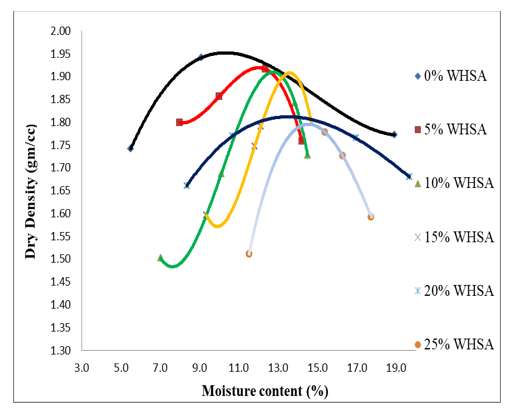
Figure 01: Variation of maximum dry density at different percentage WHSA.
According to the modified compaction effort as per the standards set by IS (Indian Standards), there is a consistent trend observed of decreasing MDD as the percentage of Water Hyacinth Stems Ash increases. In other words, when Water Hyacinth Stems Ash was added to the natural soil, the resulting mixture has a lower maximum dry density compared to the original soil. This relationship implies that the compacted mixture becomes less dense with higher concentrations of Water Hyacinth Stems Ash. This effect attributed that with the changes in the specific gravity of the soil mixture compaction behavior also changes. Similarly, the Figure 01 also illustrates the variation of Optimum Moisture Content (OMC) with different percentage of Water Hyacinth Stems Ash. The figure indicates that as the percentage of Water Hyacinth Stems Ash increases, the OMC also increases. This indicates that the mixture of soil and Water Hyacinth Stems Ash requires more moisture to achieve optimum compaction state. The reason behind this increase in OMC is linked to the Water Hyacinth Stems Ash which bearing properties that requires additional water for hydration. The larger amounts of water needed for hydration process led to higher OMC values for the soil mixture [26]. Figure 01 reflects that the compaction behavior of soil-WHSA mixes decrease in maximum dry density with higher ash content and increase in optimum moisture content with higher percentage of ash content. These findings are crucial for engineering applications involving soil improvement using Water Hyacinth Stems Ash and in understanding how these mixtures behave under different compaction efforts and moisture conditions. CBR is a measure of a soil’s strength and bearing capacity under controlled conditions, while CBR-Swell defines the swelling behavior of certain soils. Both of these tests are crucial for determining the suitability of soils for construction and engineering projects, especially for designing pavements and foundations. This value defines effects of Water Hyacinth Stem Ash on the California Bearing Ratio (CBR) of a soil. From fig 3.0 the CBR value of the natural soil was 5.25% when no Water Hyacinth Stem Ash was added (0% ash content). When Water Hyacinth Stem Ash was added to the soil, the CBR value increased. At 20% of WHSA content the CBR value increased to 6.75% after four days of soaking [27]. This suggests that the adding of Water Hyacinth Stem Ash had a positive effect on the soils bearing capacity. However, beyond 20% of WHSA content in soil mixture CBR value started to decrease. This implies that there might be an optimal or effective range of WHSA content for improving the soils CBR value. Adding too much ash beyond this optimal range could potentially have a negative impact on the engineering properties of soil.
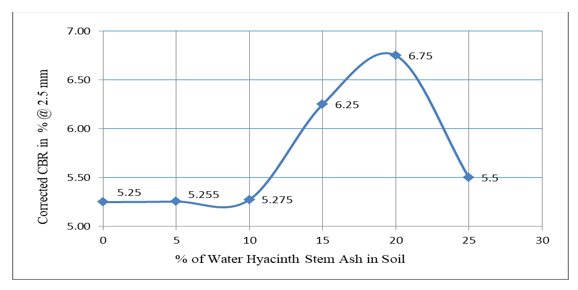
Figure 02: CBR Values Corrected in % @ 2.5mm at 4 days soaking.
Figure 02 reflects the impact of Water Hyacinth Stem Ash on the swell value and CBR swell value of soil. Swell value refers to the increase in volume of soil when it absorbs water. Soils with high swell potential can expand significantly when exposed to moisture. As the percentage of Water Hyacinth stem ash increases, the swell value of the soil decreases. This suggests that the presence of Water Hyacinth stem ash in the soil reduces its tendency to swell upon absorbing water. This would be due to the ash acting as a non-swelling material or due to the water retention properties of the soil mixture. The CBR swell value refers to the change in the California Bearing Ratio (CBR) value of the soil due to swelling. A higher CBR swell value indicates that the CBR value of the soil increases as it swells. Conversely, a lower CBR swell value means that the CBR value decreases as the soil swells. CBR swell value was 0.12% at 0% ash initially and was found 0.05% at 25% of WHSA in soil mixture. This indicates that the addition of Water Hyacinth stem ash has resulted decrease in the change of CBR value due to swelling. CBR swell is less than 0.1% on 4 days soaking [28].
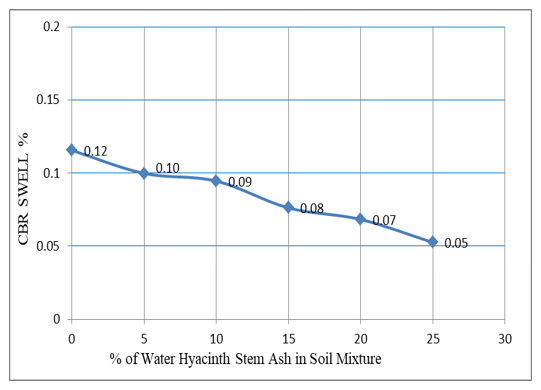
Figure 03: CBR Swell at 4 Days of Soaking
The Water Hyacinth stem ash has the potential to enhance the soil’s CBR value up to 19% of WHSA content, but exceeding that percentage could lead to diminishing returns or even a decrease in CBR value. The presence of Water Hyacinth stem ash in the soil appears to have a positive influence on both the swell value and the CBR swell value.
- CONCLUSION
To further improve subgrade soil can be improved by the addition of small amounts of lime, cement, or other stabilizing materials. Similarly certain percentage of Water Hyacinth Stems Ash can be mixed with natural soil to improve or stabilize soil which is used for subgrade soil of road pavement. This conclusion explored the use of admixture as Water Hyacinth Stems Ash at percentage of 15% and improves the geotechnical properties of natural soil used as sub grade soil for road pavements. This soil treatment technique can contribute to a more comprehensive and effective way for soil improvement strategy The addition of water hyacinth stem ash does not significantly modify the grain size distribution of the soil. It is important to understand how the water hyacinth stem ash modifies the physical parameter of the soil, which can influence the soil behavior and suitable for engineering uses. The values of liquid limit, plastic limit, and plasticity index is reducing with the increase of water hyacinth stem ash in soil mass. This decrease in plasticity index specifies that the soils have tendency to undergo bulky volume changes with changes in water content which has been stabilized. reduction in specific gravity might distress compaction and porousness, possibly influencing water movement and load-bearing capacity of traffic load built on the soil. The increase in optimum moisture content with higher ash content implies that more water is needed for optimal compaction. On the basis of findings, the study endorsed that 15 percentage of water hyacinth stem ash can be used for soil stabilization; this equilibrium among the constructive properties of the ash and potential problems confirms the anticipated upgrading in geotechnical properties without extreme use of the material.
REFERENCES
- Adarsha Lamichhanen, Gokarna Bahadur Motra, Thaman Bahadur Khadka (2020). Evaluation of Water Hyacinth Extract of Nepalese Lakes as an Admixture in Concrete Production. 8th IOE Graduate Conference, Kathmandu, Nepal.
- Adugnaw A., Samuael S., Erehmet B., Aklilu A. and Mehari A. (2017). Controlling Water Hyacinth in Lake Tana Using Biological Method at Green House and Pond Level. European Journal of Experimental Biology, Volume 7. DOI: 10.21767/2248- 9215.100001
- Amadi A.A. and Osu A.S. (2016). Effect of Curing Time on Strength Development in Black Cotton Soil – Quarry Fines Composite Stabilized With Cement Kiln Dust (CKD). Journal of King Saud University – Engineering Sciences. DOI:1016/j.jksues.2016.04.001
- Anteneh Geremew and Basha Fayissa. (2018). Experimental Performance Studies on the Improved Expansive Subgrade Soil Formation by Using Mechanical Stabilization With Natural Gravel. American Journal of Civil Engineering, Volume 6. DOI:11648/j.ajce.20180605.13
- Arunav C., Archita B. and Debangana S. (2016). Stabilization of Expansive Soil Using Sugarcane Straw Ash (SCSA). ADBU-Journal of Engineering Technology,Volume 4.
- Ashima Manoj, Aleena Eldho and Saju Sujitha S. (2019). Experimental Investigation on Water Hyacinth Ash as a Supplementary Cementing Material. International Journal of Scientific Research & Engineering Trends, Volume 5 (3).
- C Punmia (1970). Soil Mechanics and Foundation, Thirteen edition reprint (2003), Laxmi Publication (P) Ltd, 22 Golden House, Daryaganj, New Delhi-110002, India. Baglari S.K and Dash D. (2013). Improvement of Expansive Soil by Lime and Reinforcement. Proceedings of Indian Geotechnical Conference, Roorkee, India Balasubramanian, P. A. (2017). Engineering properties of soils. Centre for Advanced StudiesinEarthScience,UniversityofMysore,Mysore. DOI:10.13140/RG.2.2.16181.06887
- Balasundaram and Murug. (2019). Experimental Behaviour of Water Hyacinth Ash as Partial Replacement of Cement on Short Column. International Journal of Recent Technology and Engineering (IJRTE), Volume 7(6S5,).
- Bayshakhi Deb Nath, L. G. (2018). Geotechnical Properties of Wood Ash-Based Composite Fine-Grained Soil. (A. Perrot, Ed.) Hindawi, Volume 7.
- Bell F.G. (1996.). Lime Stabilization of Clay Minerals and Soils. Journal of Engineering, Volume 42.
- Brooks, D. R. (2009). Soil Stabilization With Flyash and Rice Husk Ash. International Journal of Research and Reviews in Applied Sciences, Volume 1(3).
- Bureau of Indian Standard IS: 2720 (Part 10)-1985. Method of Test for Soil Part 10 Determination of Unconfined Compressive Strength (Second Revision), Nanak Bhavan, 9 Bahadur Shah, Zafar Marg, New Delhi 110002.
- Bureau of Indian Standard IS: 2720 (Part 16)-1985. Method of Test for Soil Part 16 Laboratory Determination of CBR (Second Revision), Nanak Bhavan, 9 Bahadur Shah, Zafar, Marg New, Delhi 110002.
- Bureau of Indian Standard IS: 2720 (Part 3)-1985. Method of Test for Soil Part 3 Determination of Specific Gravity (First Revision), Nanak Bhavan, 9 Bahadur Shah, Zafar Marg, New Delhi 110002.
- Bureau of Indian Standard IS: 2720 (Part 4)-1985. Method of Test for Soil Part 4 Grain Size Analysis (First Revision), Nanak Bhavan, 9 Bahadur Shah, Zafar Marg ,, New Delhi 110002.
- Bureau of Indian Standard IS: 2720 (Part 40)-1970. Method of Test for Soil Part 40 Determination of Free Swell Index of Soils (Second Revision), Nanak Bhavan, 9 Bahadur Shah, Zafar Marg, New Delhi 110002.
- Bureau of Indian Standard IS: 2720 (Part 5)-1985. Method of Test for Soil Part 5 Determination of Liquid and Plastic Limit (First Revision), Nanak Bhavan, 9 Bahadur Shah, Zafar Marg, New Delhi 110002.
- Bureau of Indian Standard IS: 2720 (Part 7)-1985. Method of Test for Soil Part 7 Determination of Water Content-Dry Density Relation Using Heavy Compaction (Second Revision), Nanak Bhavan, 9 Bahadur Shah, Zafar Marg New Delhi 110002.
- Dinesh S. and Murugesh V. (2017). Experimental Behavior of Water Hyacinth Ash as the Partial Replacement of Cement in Concrete. IJSRSET, Volume 3 (3).
- Ehitabezahu N. (2014). Investigation on the Effects of Combining Lime and Sodium. Journal of EEA, Volume 31.
- Gandhi K.S. (2012). Behavior of Expansive Soils Stabilized With Hydrated Lime and Bagasse Fibres. International Journal of Engineering Research & Technology (IJERT, Volume 1(5).
- Gopal Ranjan, A.S.R. Rao (1991). Basic and Applied Soil Mechanics. Second Edition (2000), Reprint (2005). New Age International (P) Ltd. Ansari Road, Daryagani, New Delhi-110002, India.
- Habtamu Marren, (2015). Critical Assesment on the Stabilization of Expansive Soils by Different Techniques. Addis Ababa Institute of Technology, Civil And Enviromental Engineering, Addis Ababa.
- Habtamu Solomon (2011). Chemical Stabilization of Expansive Sub-grade Soil Performance Evaluation on a Selected Road Section in Northeastern Addis Ababa. Addis Ababa University.
- Hiwot Simon. (2016). An Alternative for Stabilization of Addis Ababa Expansive Soil by Crushed and Natural Sand. Addis Ababa Institute of Technology, Civil Engineering, Addis Abab.
- Indian Road Congress (2010). Guidelines for Soil and Granular Material Stabilization Using Cement, Lime & Fly Ash. Kama Koti Marg, Sector 6, R. K. Puram, New Delhi- 110 022, India,
- Indian Road Congress (2018). Guidelines for the Design of Stabilized Pavements. Kama Koti Marg, Sector-6, R. K. Puram, New Delhi-110 022, India
- Joseph E Bowles (2019). Foundation Analysis and Design. Fifth Edition, McGraw Hill Education Pvt Ltd., Delhi, India.
Publication History
Submitted: March 04, 2025
Accepted: March 30, 2025
Published: April 31, 2025
Identification
D-0584
DOI
https://doi.org/10.71017/djnsi.4.4.d-0584
Citation
Santosh GC (2025). Experimental Analysis on Geotechnical Behaviors of Sub Grade Soil for Road Pavements on Addition of Water Hyacinth Ash. Dinkum Journal of Natural & Scientific Innovations, 4(04):247-257.
Copyright
© 2025 The Author(s).