

Vol. 5 No.01 (2026) | Page: 75-84 | Review Article 
Technological Evolution and Labor Market Dynamics: A Life-Cycle Perspective on Automation, Skill Reallocation, and Employment Trajectories
Carlos Pérez 1*
-
- Facultad de Sociología, Universidad de La Habana, Havana, Cuba.
 carlos.perez@uh.cu




ABSTRACT
Background: Technological progress shapes employment, skills, and wages, but its effects vary across the stages of the Technology Life Cycle (TLC).
Objective: To examine how employment and labor market outcomes change across the four stages of the TLC.
Methods: This review synthesized empirical and theoretical studies published between 2021 and 2026, focusing on employment, skill demand, wage dynamics, labor reallocation, and institutional responses.
Results: The maturity stage is associated with automation-driven displacement, whereas the decline stage promotes creative destruction and workforce reallocation. Institutional support and reskilling initiatives help reduce adverse employment effects.
Conclusion: The labor market impacts of technology are dynamic and stage-specific. Effective reskilling policies and institutional support are essential for facilitating successful technological transitions and inclusive growth.
Keywords: Automation, technology life cycle, employment, skill displacement
Key points:
- How do employment, skill demand, and wages change across the four stages of the technology life cycle?
- Technological maturity drives automation-related job displacement, while decline promotes creative destruction and workforce reallocation.
- Reskilling initiatives and institutional support help mitigate employment disruption and promote inclusive technological transitions.
- INTRODUCTION
The fear of technological unemployment is as old as industrialization itself [1]. From the Luddite movement of the early nineteenth century to contemporary anxieties surrounding generative artificial intelligence (AI) and autonomous robotics, the labor market implications of technological change have continuously reshaped political, social, and economic discourse [2]. However, recent scholarship (2021–2026) has increasingly moved beyond simplistic binary narratives that portray automation either as an inevitable destroyer of jobs or as a universally beneficial engine of economic growth. Instead, contemporary research emphasizes a more nuanced structural perspective in which the effects of automation depend on technological maturity, institutional adaptation, labor-market flexibility, and organizational transformation [3]. Central to this evolving understanding is the recognition that automation is not a singular event but a dynamic, time-dependent process governed by the Technology Life Cycle (TLC). Technologies affect labor markets differently when they exist as experimental and costly innovations than when they become standardized, scalable, and widely accessible production tools [4]. Although task-based economic frameworks, particularly those developed by Acemoglu and Restrepo, have significantly advanced understanding of how automation alters the allocation of tasks between humans and machines, the broader automation literature has seldom integrated these insights with life-cycle theories of technological development [5]. This omission has contributed to a fragmented body of evidence and often contradictory policy recommendations. Studies examining technologies in their early phases of diffusion frequently report positive employment effects, rising demand for highly skilled workers, entrepreneurial opportunities, and substantial productivity enhancements [2,6]. In contrast, investigations of mature automation technologies often identify considerable labor displacement, wage stagnation, occupational polarization, and declining opportunities for routine middle-skill workers. Such conflicting findings suggest that the labor-market consequences of automation cannot be fully understood without accounting for the stage of technological evolution at which those effects are observed. The Technology Life Cycle provides a valuable theoretical lens for addressing this limitation. Traditionally, technologies progress through stages of emergence, growth, maturity, and eventual saturation or replacement. During the emergence stage, technologies tend to complement rather than substitute human labor because significant human expertise is required for development, customization, implementation, and monitoring [7]. The growth stage is typically characterized by rapid diffusion, increasing investment, organizational restructuring, and the creation of complementary occupations associated with deployment and maintenance. As technologies advance toward maturity, however, standardization, declining implementation costs, and improved reliability increase their capacity to substitute for routine human tasks. Consequently, labor displacement becomes more pronounced, particularly in occupations characterized by predictable cognitive or manual activities. At this stage, automation may contribute to wage polarization by increasing demand for both highly skilled strategic workers and lower-wage service roles while reducing employment opportunities in the middle of the occupational distribution [2,8]. Viewing automation through a TLC framework therefore enables reconciliation of what often appear to be conflicting empirical results. The same technology can generate employment opportunities during one phase of its evolution and reduce labor demand during another. Employment creation and technological unemployment should not be interpreted as mutually exclusive outcomes but rather as sequential and overlapping consequences of technological diffusion [9]. Short-term complementarities frequently coexist with long-term substitution effects, while new occupations emerge simultaneously with the decline of older ones. This dynamic interpretation aligns with contemporary evidence showing that technological progress reshapes labor markets through continuous processes of task reallocation, skill transformation, and occupational restructuring rather than through abrupt job elimination alone. The emergence of AI-driven systems and advanced robotics further reinforces the importance of adopting a life-cycle perspective. Generative AI, machine learning applications, and autonomous decision-support systems remain at varying stages of technological maturity across sectors and regions [8,10]. Consequently, observed labor-market outcomes differ substantially between industries, countries, and occupational groups. Early adopters often experience productivity gains and increased demand for complementary digital skills, whereas sectors characterized by mature and widely deployed automation technologies may witness stronger substitution effects. These heterogeneous outcomes underscore the need for a theoretical framework capable of capturing temporal variation in automation impacts rather than assuming uniform effects across technological contexts [11]. Against this background, the present review proposes an integrated conceptual framework that combines Technology Life Cycle theory with contemporary automation economics. By synthesizing evidence published between 2021 and 2026, the study seeks to explain how technological maturity shapes patterns of job creation, displacement, wage dynamics, skill demand, and labor-market inequality. In doing so, it advances the argument that technological unemployment is not an inherent property of automation itself but rather an evolving outcome influenced by the interaction between technological development, workforce adaptation, organizational strategy, and public policy [12]. Such an approach provides a more comprehensive basis for understanding the long-term socioeconomic consequences of automation and for designing policy interventions that are responsive to the distinct challenges and opportunities associated with different stages of technological evolution [2,13].
In task-based frameworks, aggregate output is produced by combining a continuum of tasks i∈ [0,1]:
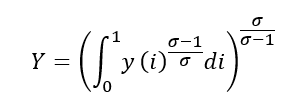
Where σ is the elasticity of substitution across tasks, and each task y(i) can be performed by either human labor L(i) or automated capital K(i):

The threshold parameter I∈[0,1] separates tasks performed by human labor (i>I) from those automated by machines (i≤I). Automation corresponds to an increase in I, expanding the domain of tasks assigned to capital. In standard static models, parameters γ_K (i) (capital productivity in task i) and I are assumed fixed. In our Technology Life Cycle framework, these parameters explicitly evolve over time t through distinct phases:

- Phase 1 (Emergence): dI/dt≈0, but high complementary R&D expands novel tasks (N(t) growth via reinstatement effects).
- Phase 2 (Growth): γ_K (i,t) increases rapidly; productivity effects dominate, leading to expansion in overall economic output.
- Phase 3 (Maturity): Standardized, low-cost capital causes a sharp increase in I(t), resulting in strong displacement effects for routine operational tasks.
- Phase 4 (Decline): Capital stock obsolescence shifts focus toward newer, next-generation technology cycles.
During the emergence phase of a technological trajectory, innovations are typically characterized by high architectural uncertainty, elevated production costs, limited scalability, and rapid iterative development. At this stage, labor market effects are predominantly complementary rather than substitutive [14]. Demand increases substantially for highly skilled professionals, including scientists, software engineers, systems architects, and domain specialists, creating a pronounced skill premium. Emerging technologies function primarily as complements to non-routine cognitive labor, enhancing the productivity of highly educated workers rather than replacing them. Concurrently, reinstatement effects dominate employment dynamics, as the introduction of novel technologies generates entirely new occupational categories related to system design, integration, calibration, testing, governance, and safety oversight [15]. Consequently, employment effects during this phase are generally modestly positive and concentrated within technology-producing industries, research-intensive ecosystems, and pioneering early-adopter organizations. As technological architectures mature and dominant designs emerge, the technology enters a diffusion and expansion phase characterized by large-scale production, commercial deployment, and accelerating market penetration. During this stage, productivity-enhancing effects become increasingly important as declining deployment costs enable firms to achieve significant operational efficiencies [7,16]. The employment consequences of these productivity gains depend largely on the price elasticity of demand for the firm’s outputs. Where demand is sufficiently elastic, lower costs and expanded production can stimulate employment growth despite reductions in labor requirements per unit of output. Skill demand also broadens beyond research and development activities toward applied technical competencies, including industrial maintenance, data management, process monitoring, and specialized equipment operation. As firms expand production and upstream and downstream industries respond to increased demand, net employment effects are frequently positive at both the firm and industry levels. In later stages of technological maturity, substitution effects tend to become more pronounced as standardized and cost-effective technologies are deployed across a wider range of operational settings. Capital increasingly substitutes for labor in routine, codifiable, and middle-skill tasks, including assembly-line production, welding, data processing, clerical work, and basic customer service functions [17]. This process commonly contributes to labor market polarization, whereby middle-skill occupations contract while employment growth becomes concentrated at both the high-skill and low-skill ends of the occupational distribution. Displaced workers often transition into lower-paying non-routine service or manual occupations, contributing to widening wage dispersion and inequality. Under these conditions, net employment effects may become negative within directly affected industries unless offset by strong aggregate demand growth, the creation of new complementary industries, or the emergence of entirely new technological sectors capable of generating replacement employment opportunities [18]. Overall, the employment consequences of technological change are neither static nor uniform across time. Rather, they evolve systematically across the technology life cycle, with complementary and job-creating effects dominating during emergence and diffusion, while labor-substituting effects become increasingly salient as technologies mature and standardize. This dynamic perspective helps reconcile seemingly conflicting findings in the technological change and labor economics literature by demonstrating that employment outcomes depend critically on the stage of technological development, market expansion dynamics, and the balance between productivity, reinstatement, and substitution effects [4,19].
- Empirical Evidence Synthesis (2021–2026)
Recent empirical literature provides robust micro-level and macro-level evidence supporting the life-cycle perspective of automation.
Table 01: Employment impacts of selected technologies across Technology Life Cycle stages.
| Research Domain / Benchmark | Focus Technologies Analyzed | Primary Data Sources Used | Key Empirical Findings (2021–2026) |
| Industrial Robotics | Articulated Robots, SCARA, AMRs | IFR Data, Census Microdata | Industrial robots exhibit classic Stage 3 maturity; direct displacement of middle-skill assembly workers, strong local wage pressure. |
| Generative AI & LLMs | Foundation Models, Code Assistants | Online Job Postings, GitHub Logs | Currently in late Stage 1 / early Stage 2; complementary to software developers and knowledge workers, boosting task productivity. |
| Enterprise Software (ERP/CRM) | Cloud Platforms, Automated Accounting | Linked Employer-Employee Data | Fully in Stage 3/4; significant consolidation of administrative back-office roles, shifting employment to analytical functions. |
| Autonomous Logistics | AGVs, Automated Warehousing | Supply Chain Telemetry | Transitioning from Stage 2 to Stage 3; reduced demand for manual forklift operators, increased demand for fleet engineers. |
- Divergent Impact of Robotics vs. AI: Industrial robotics (a mature technology) demonstrates significant net labor displacement in manufacturing zones. Conversely, Generative AI (an emerging/growth technology) currently shows high complementary productivity effects, though its rapid transition toward maturity may compress the typical life-cycle timeline.
- Firm-Level vs. Industry-Level Paradox: Firm-level studies consistently reveal that early adopters of automation expand employment due to rapid market share gains at the expense of non-automating competitors. However, at the aggregate industry level, total employment in affected sectors frequently stagnates or declines as market consolidation takes place.
- Spatial Agglomeration Effects: High-skill R&D phases of the TLC concentrate heavily in urban innovation hubs, whereas direct displacement in mature phases disproportionately impacts rural, industrial heartlands.
- STRUCTURAL BOTTLENECKS AND LABOR MARKET FRICTION
A key limitation of technology-driven labor market adjustment is that worker reallocation rarely occurs smoothly or instantaneously. Instead, a range of structural frictions slows the movement of labor from declining technological regimes to expanding ones, generating persistent adjustment costs and transitional unemployment [11,20]. These frictions imply that even when technological progress ultimately creates new employment opportunities, substantial segments of the workforce may experience prolonged periods of economic dislocation before benefiting from those opportunities. One important source of friction arises from skill mismatches. As mature technologies automate established tasks and reduce labor demand in traditional occupations, emerging sectors often require fundamentally different competencies that cannot be acquired quickly [21]. The skills demanded by new technological paradigms typically involve significant investments in education, training, and experiential learning. Consequently, workers displaced from mature industrial occupations frequently face considerable barriers to entry into emerging technology-intensive roles. For example, a production welder displaced by advanced automation cannot readily transition into an artificial intelligence system operator or machine-learning technician without extensive retraining that may require several years to complete. This temporal gap creates a mismatch between the speed of technological change and the pace of human capital accumulation [22]. Geographic immobility constitutes a second major obstacle to labor market adjustment. The economic disruptions associated with mature automation are often concentrated in specialized manufacturing regions where particular industries have historically dominated local employment. In contrast, emerging technology sectors tend to cluster in innovation hubs and metropolitan centers that benefit from agglomeration economies, research institutions, venture capital networks, and specialized labor pools [11,23]. High housing costs, relocation expenses, family obligations, and strong community attachments frequently restrict workers’ ability or willingness to migrate toward these expanding labor markets. As a result, displaced workers may remain geographically separated from newly created employment opportunities, prolonging regional inequality and labor market distress. A further challenge stems from institutional rigidities within education and workforce development systems. Universities, vocational training centers, certification bodies, and public workforce programs often adapt slowly to technological advances. Curricular reform typically requires lengthy approval processes, infrastructure investments, instructor retraining, and policy coordination, creating a substantial lag between technological innovation and educational response [24]. By the time formal training programs incorporate competencies associated with an emerging technology, that technology may already have progressed into a subsequent stage of development, altering the skills demanded by employers [25]. This persistent lag reduces the effectiveness of conventional educational pathways and can exacerbate shortages of appropriately trained workers while simultaneously increasing the vulnerability of workers whose existing skills have become obsolete. Collectively, these structural frictions suggest that labor market adjustment is not determined solely by the number of jobs created and destroyed by technological change [18,26]. Rather, employment outcomes depend critically on the speed and effectiveness with which workers, firms, educational institutions, and regional economies adapt to shifting technological requirements. Consequently, technological transitions often generate substantial short- and medium-term adjustment costs even when long-run economic growth and employment ultimately remain positive. This perspective highlights the importance of reskilling policies, labor mobility support, lifelong learning systems, and adaptive educational institutions in mitigating the social and economic disruptions associated with successive waves of technological change [27].
- GLOBAL PERSPECTIVES: DEVELOPED VS. DEVELOPING ECONOMIES
The interaction between technological change and labor market outcomes varies significantly across regions because countries occupy different positions within global innovation systems and face distinct demographic, institutional, and economic conditions [28]. Consequently, the employment effects associated with technological emergence, diffusion, and maturity are highly uneven across the global economy. In advanced industrial economies, the labor market consequences of mature automation are increasingly moderated by demographic change. Countries such as Japan, Germany, and South Korea face aging populations and declining working-age labor forces. Under these circumstances, automation often serves not primarily as a substitute for labor but as a compensatory mechanism for persistent labor shortages. Rather than generating large-scale technological unemployment, mature automation can sustain economic output, preserve productivity growth, and alleviate workforce constraints created by demographic decline [15,29]. As a result, the displacement effects traditionally associated with automation are partially offset by shrinking labor supply. At the same time, advances in robotics, artificial intelligence, and automated manufacturing have increased the feasibility of reshoring industrial production. Historically, manufacturing activities were relocated to lower-wage economies to exploit labor cost differentials [11,30]. However, as automation reduces the relative importance of labor costs within total production expenses, firms can increasingly relocate production closer to domestic markets while maintaining competitiveness through technological efficiency. This process may stimulate domestic investment, strengthen supply-chain resilience, and generate new employment opportunities in high-value activities such as advanced manufacturing, equipment maintenance, systems integration, and industrial software development [22,31]. Developed economies are also more likely to capture the highest-value segments of the technology life cycle. Their concentration of research universities, innovation ecosystems, venture capital networks, and technology-intensive firms enables them to benefit from the employment creation associated with research, design, software engineering, and intellectual property generation during the early stages of technological development, while simultaneously benefiting from productivity gains during technological maturity. In contrast, developing economies face a more challenging adjustment process. Historically, industrialization has provided a pathway for economic growth through the large-scale absorption of labor into export-oriented manufacturing sectors. However, increasingly affordable and sophisticated automation technologies reduce the traditional comparative advantage derived from abundant low-wage labor. As advanced economies automate production and potentially reshore manufacturing activities, developing countries face the risk of premature de-industrialization, whereby manufacturing employment peaks at lower income levels and earlier stages of economic development than experienced by previous generations of industrialized countries [32]. This dynamic weakens one of the most important mechanisms through which structural transformation and poverty reduction have historically occurred. A related challenge stems from dependence on imported capital and technology. Many developing economies participate in the technology life cycle primarily as adopters rather than creators of technological innovations. They frequently import mature automation systems, industrial machinery, and digital technologies while capturing only limited shares of the high-value activities associated with research, design, software development, and equipment manufacturing. Consequently, these economies may experience the labor-displacing effects of mature technologies without simultaneously benefiting from the employment creation, knowledge accumulation, and income growth generated during earlier stages of innovation [2,5,33]. This asymmetry contributes to persistent productivity gaps between technology-producing and technology-consuming economies. Furthermore, the concentration of innovation capabilities within a relatively small number of global technology hubs creates the risk of technological dependency. Firms and governments in developing economies may become increasingly reliant on foreign technologies, standards, platforms, and intellectual property, limiting opportunities for indigenous innovation and technological upgrading. Without sustained investment in education, research capacity, digital infrastructure, and entrepreneurial ecosystems, many developing countries may remain concentrated in lower-value segments of global production networks while advanced economies continue to dominate the most profitable stages of the technology life cycle [34]. These regional differences suggest that the employment consequences of automation cannot be fully understood through firm-level productivity analysis alone. Rather, they must be interpreted within the broader context of global technological inequality, divergent demographic trends, and unequal participation in innovation systems. While developed economies are often positioned to capture both innovation-driven employment and productivity gains, developing economies face greater risks of labor displacement, premature de-industrialization, and technological dependency unless they successfully expand their role from technology adoption to technology creation and knowledge-intensive production [24,35].
- CONCLUSION
Evaluating automation through the lens of the Technology Life Cycle (TLC) helps reconcile longstanding contradictions in the labor economics and technological change literature. Technological progress should not be viewed either as an inevitable source of mass unemployment or as a frictionless engine of universal prosperity. Instead, its labor market effects evolve systematically across different stages of the technology life cycle. During emergence, new technologies function primarily as complements to highly skilled labor, generating demand for researchers, engineers, and specialized technical professionals while creating novel occupational categories. As technologies enter their growth phase, expanding deployment and falling costs enhance productivity, stimulate market expansion, and frequently support broad-based employment growth through increased output and complementary economic activities. As technologies mature, however, the balance increasingly shifts toward substitution effects. Standardized and cost-effective automation enables capital to replace labor in routine and codifiable tasks, particularly within middle-skill occupations. This process often contributes to labor market polarization, wage inequality, and occupational displacement, especially when worker retraining and labor mobility fail to keep pace with changing technological requirements. Eventually, as technologies enter decline and are replaced by newer technological paradigms, processes of creative destruction become increasingly important. While older industries contract and jobs disappear, new sectors emerge, initiating another cycle of innovation, employment creation, and economic restructuring. The overall employment consequences of automation therefore depend not only on technological capabilities but also on the timing and interaction of complementary, productivity-enhancing, and labor-substituting mechanisms across the technology life cycle. Understanding this dynamic perspective highlights why empirical studies often reach different conclusions regarding automation’s labor market effects. Research focusing on emerging technologies frequently observes job creation and skill complementarities, whereas studies examining mature technologies are more likely to identify displacement and substitution effects. Both findings can be correct when viewed within a life-cycle framework. Successfully navigating these transitions requires forward-looking institutions capable of responding to rapidly evolving technological conditions. Educational systems must emphasize lifelong learning and continuous skill development rather than one-time credential acquisition. Labor market policies must support worker mobility, reskilling, and occupational transitions, particularly during periods of technological maturity when displacement pressures intensify. At the same time, industrial and innovation policies should encourage participation in high-value stages of technological development, including research, design, and knowledge-intensive production. By recognizing the time-varying nature of automation and its heterogeneous impacts across industries, skills, and regions, policymakers, business leaders, and researchers can better align technological innovation with sustained productivity growth, economic resilience, and inclusive employment outcomes. Ultimately, the challenge is not to resist technological change but to build adaptive institutions that enable societies to capture its benefits while mitigating its inevitable adjustment costs.
AUTHOR CONTRIBUTION STATEMENT
Carlos Pérez: Substantial contributions to the conception or design of the work; or the acquisition, analysis, or interpretation of data for the work, Drafting the work or reviewing it critically for important intellectual content; AND Final approval of the version to be published, and Agreement to be accountable for all aspects of the work in ensuring that questions related to the accuracy or integrity of any part of the work are appropriately investigated and resolved.
ACKNOWLEDGEMENTS: No specific individuals, institutions, or organizations contributed additional support or assistance requiring formal acknowledgement for this study.
DECLARATIONS:
Funding: This research received no specific grant, financial support, or funding from any public, commercial, or non-profit organization.
Conflicts Of Interest: The authors declare that there are no conflicts of interest, financial or otherwise, that could have influenced the research, analysis, or interpretation of the findings presented in this article.
Data Availability: The datasets and information used in this study are publicly available from the sources cited within the article. No proprietary or restricted data were used.
Generative AI Disclosure: Generative artificial intelligence tools were not used for generating research data, conducting analyses, or producing scientific conclusions in this study. The authors take full responsibility for the content and accuracy of the manuscript.
REFERENCES
- Acemoglu, D., & Restrepo, P. (2018). Artificial intelligence, automation, and work. NBER Working Paper Series, 24196. https://doi.org/10.3386/w24196
- Acemoglu, D., & Restrepo, P. (2019). Automation and new tasks: How technology displaces and reinstates labor. Journal of Economic Perspectives, 33(2), 3–30. https://doi.org/10.1257/jep.33.2.3
- Acemoglu, D., & Restrepo, P. (2020). Robots and jobs: Evidence from US labor markets. Journal of Political Economy, 128(6), 2188–2244. https://doi.org/10.1086/705716
- Acemoglu, D., Lelarge, C., & Restrepo, P. (2020). Competing with robots: Firm-level evidence from France. AEA Papers and Proceedings, 110, 383–388. https://doi.org/10.1257/pandp.20201003
- Acemoglu, D., Autor, D., Hazell, J., & Restrepo, P. (2022). Artificial intelligence and jobs: Evidence from online vacancies. Journal of Labor Economics, 40(S1), S293–S340. https://doi.org/10.1086/718327
- Acemoglu, D., & Restrepo, P. (2024). Automation and rent dissipation: Implications for wages, inequality, and productivity. NBER Working Paper No. 32536. https://doi.org/10.3386/w32536
- Autor, D. H. (2015). Why are there still so many jobs? The history and future of workplace automation. Journal of Economic Perspectives, 29(3), 3–30. https://doi.org/10.1257/jep.29.3.3
- Autor, D. H. (2019). Work of the past, work of the future. AEA Papers and Proceedings, 109, 1–32. https://doi.org/10.1257/pandp.20191110
- Autor, D. H., Levy, F., & Murnane, R. J. (2003). The skill content of recent technological change: An empirical exploration. Quarterly Journal of Economics, 118(4), 1279–1333. https://doi.org/10.1162/003355303322552801
- Autor, D. H., & Dorn, D. (2013). The growth of low-skill service jobs and the polarization of the US labor market. American Economic Review, 103(5), 1553–1597. https://doi.org/10.1257/aer.103.5.1553
- Autor, D. H., Dorn, D., Katz, L. F., Patterson, C., & Van Reenen, J. (2020). The fall of the labor share and the rise of superstar firms. Quarterly Journal of Economics, 135(2), 645–709. https://doi.org/10.1093/qje/qjaa004
- Bessen, J. E. (2019). AI and jobs: The role of demand. NBER Working Paper Series, 24235. https://doi.org/10.3386/w24235
- Frank, M. R., Autor, D., Bessen, J., Brynjolfsson, E., Cebrian, M., Deming, D., Feldman, M., Groh, M., Lobo, J., Moro, E., Wang, D., Youn, H., & Rahwan, I. (2019). Toward understanding the impact of artificial intelligence on labor. Proceedings of the National Academy of Sciences, 116(14), 6531–6539. https://doi.org/10.1073/pnas.1900949116
- Frey, C. B., & Osborne, M. A. (2017). The future of employment: How susceptible are jobs to computerisation? Technological Forecasting and Social Change, 114, 254–280. https://doi.org/10.1016/j.techfore.2016.08.019
- Gregory, T., Salomons, A., & Zierahn, U. (2022). Racing with or against the machine? Evidence from Europe. Review of Economics and Statistics, 104(5), 869–886. https://doi.org/10.1162/rest_a_00975
- Graetz, G., & Michaels, G. (2018). Robots at work. Review of Economics and Statistics, 100(5), 753–768. https://doi.org/10.1162/rest_a_00754
- Korinek, A., & Stiglitz, J. E. (2021). Artificial intelligence and its implications for income distribution and unemployment. Economics of Artificial Intelligence, 349–390. https://doi.org/10.7208/chicago/9780226613475.003.0014
- Nedelkoska, L., & Quintini, G. (2018). Automation, skills use and training. OECD Social, Employment and Migration Working Papers, No. 202. https://doi.org/10.1787/2e2f4eea-en
- Arntz, M., Gregory, T., & Zierahn, U. (2017). Revisiting the risk of automation. Economics Letters, 159, 157–160. https://doi.org/10.1016/j.econlet.2017.07.001
- Aghion, P., Antonin, C., Bunel, S., & Jaravel, X. (2020). What are the labor and product market effects of automation? New evidence from France. CEPR Discussion Paper. https://doi.org/10.2139/ssrn.3659206
- Brynjolfsson, E., Li, D., & Raymond, L. R. (2023). Generative AI at work. NBER Working Paper No. 31161. https://doi.org/10.3386/w31161
- Felten, E., Raj, M., & Seamans, R. (2021). Occupational, industry, and geographic exposure to artificial intelligence. Strategic Management Journal, 42(12), 2195–2225. https://doi.org/10.1002/smj.3286
- Webb, M. (2020). The impact of artificial intelligence on the labor market. SSRN Electronic Journal. https://doi.org/10.2139/ssrn.3482150
- Deming, D. J. (2017). The growing importance of social skills in the labor market. Quarterly Journal of Economics, 132(4), 1593–1640. https://doi.org/10.1093/qje/qjx022
- Goldin, C., & Katz, L. F. (2009). The race between education and technology. Harvard University Press. https://doi.org/10.2307/j.ctvjghwjt
- Goos, M., Manning, A., & Salomons, A. (2014). Explaining job polarization: Routine-biased technological change and offshoring. American Economic Review, 104(8), 2509–2526. https://doi.org/10.1257/aer.104.8.2509
- Salomons, A. (2023). New frontiers: The origins and content of new work, 1940–2018. Quarterly Journal of Economics, 139(3), 1399–1465. https://doi.org/10.1093/qje/qjae008
- Autor, D., Mindell, D., & Reynolds, E. (2020). The work of the future: Building better jobs in an age of intelligent machines. MIT Task Force Report. https://doi.org/10.7551/mitpress/14555.001.0001
- Agrawal, A., Gans, J., & Goldfarb, A. (2019). Artificial intelligence: The ambiguous labor market impact of automating prediction. In The Economics of Artificial Intelligence. https://doi.org/10.7208/chicago/9780226613475.003.0008
- Acemoglu, D., Johnson, S., & Autor, D. H. (2025). Building pro-worker artificial intelligence. Brookings Papers on Economic Activity. https://doi.org/10.1353/eca.2025.0001
Supplemental Material
No supplementary files, datasets, figures, or additional materials are associated with this study. Any information necessary to understand and evaluate the work is included in the main article.
Citation
Carlos Pérez (2026). Technological Evolution and Labor Market Dynamics: A Life-Cycle Perspective on Automation, Skill Reallocation, and Employment Trajectories. Dinkum Journal of Social Innovations, 5(01): 75-84. https://doi.org/10.71017/djsi.5.01.d-0579
DOI
https://doi.org/10.71017/djsi.5.01.d-0579
Identification
D-0579
Publication History
Submitted: 06-01-2026
Accepted: 22-01-2026
Published: 31-01-2026
Copyright
© The Author(s) 2026
Publishing License

 This is an Open Access article distributed under the terms of the Creative Commons Attribution (CC BY 4.0) License .